
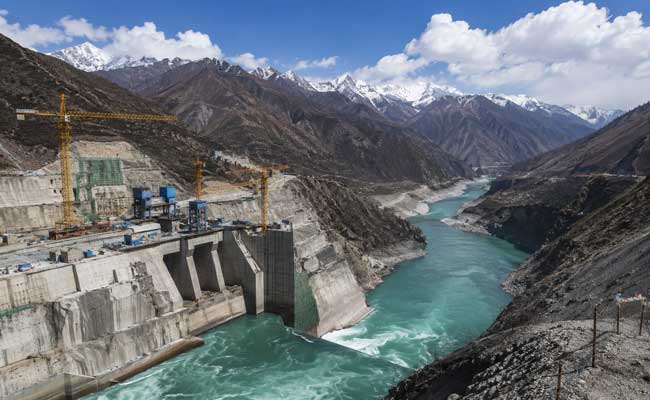
China’s decision to move ahead with the construction of a massive hydropower project on the lower reaches of the Yarlung Tsangpo River has once again brought the complex issue of transboundary water management into sharp focus. Situated barely 50 kilometers from the Indian border, the project is not merely an engineering undertaking; it is a development with far-reaching environmental, economic, and geopolitical implications for South Asia.
The Yarlung Tsangpo, which enters India through Arunachal Pradesh as the Siang River before becoming the Brahmaputra in Assam, is among the most significant river systems in the region. Millions of people depend on its waters for agriculture, fisheries, transportation, and daily livelihoods. Any large-scale intervention upstream therefore naturally raises concerns among downstream communities and governments.
China has consistently maintained that the project’s primary objective is hydropower generation and the promotion of clean energy. As the world’s largest emitter of greenhouse gases, Beijing’s efforts to expand renewable energy infrastructure are understandable and, in principle, align with global climate goals. However, the scale and strategic location of this particular project have led many experts to question whether its implications extend far beyond electricity generation.


For India, the concern is not simply about the quantity of water flowing downstream. Equally important are questions surrounding the timing, regulation, and management of river flows. Alterations in natural water patterns can affect ecosystems, agriculture, and flood cycles. In a region already vulnerable to extreme weather events and climate change, even minor disruptions could have significant consequences for local populations.
The absence of a comprehensive water-sharing treaty between India and China further complicates the situation. Unlike many international river basins governed by legally binding agreements, the Brahmaputra remains subject largely to bilateral understandings and data-sharing arrangements. While hydrological information is exchanged during certain periods, India has repeatedly sought greater transparency regarding China’s upstream activities. Such requests are not unreasonable. Rivers that cross national boundaries require cooperative management, mutual trust, and timely communication.
The strategic dimension cannot be ignored either. Water has increasingly emerged as a critical element of national security in the twenty-first century. As populations grow and climate pressures intensify, control over freshwater resources is becoming a matter of geopolitical significance. The construction of one of the world’s largest dams on a river that sustains millions downstream inevitably introduces concerns about leverage, vulnerability, and long-term regional stability.
India’s response so far reflects a prudent balance between diplomacy and preparedness. New Delhi has continued to engage Beijing through diplomatic channels while simultaneously strengthening flood forecasting systems, monitoring networks, and infrastructure resilience in the northeastern states. This dual-track approach acknowledges a simple reality: while cooperation remains the preferred path, preparedness is essential in an uncertain environment.
At a broader level, the Yarlung Tsangpo project underscores the urgent need for stronger regional frameworks governing transboundary rivers. Climate change is altering rainfall patterns, increasing the frequency of extreme weather events, and placing unprecedented stress on water systems. In such a context, unilateral actions on shared rivers risk creating mistrust and instability.
The future of the Brahmaputra basin should not become a source of confrontation between two major Asian powers. Instead, it should serve as an opportunity to demonstrate that development and environmental responsibility can coexist with transparency and international cooperation. The true challenge is not merely building dams or generating electricity; it is ensuring that the benefits of development do not come at the expense of regional trust and shared security.
Ultimately, the Yarlung Tsangpo dam is more than a hydropower project. It is a test of how Asia’s rising powers manage shared resources in an era defined by environmental uncertainty and strategic competition. The choices made today will shape not only the future of the Brahmaputra basin but also the broader trajectory of India-China relations for decades to come.