

In diplomacy, every handshake is examined, every smile interpreted, and every photograph archived as history. Sometimes, however, history is not written by speeches or agreements—it is written by an umbrella.
During Iranian President Masoud Pezeshkian’s visit to Islamabad, Pakistan and Iran discussed trade, technology, border security, cybersecurity, agriculture, and regional stability. The agenda was ambitious, the statements were optimistic, and the diplomatic language was polished.
Yet the internet ignored all of it.

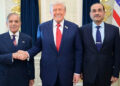
Instead, millions watched a far simpler scene: Pakistan’s Prime Minister Shehbaz Sharif comfortably walking beneath an umbrella, while his state guest—the President of Iran—and Iran’s Foreign Minister Abbas Araghchi walked under the blazing sun.
It was a moment that lasted only seconds.
The memes will probably outlive the summit.
Diplomacy has always been theatre. The red carpet, the ceremonial guard, the order of flags, the placement of chairs—none of these are accidental. They are carefully choreographed because respect is often communicated through gestures before it is expressed through words.
Which is why the umbrella became the star of the visit.
One couldn’t help but wonder whether Islamabad had accidentally invented a new foreign policy doctrine: strategic shade for domestic leadership, strategic sunshine for foreign guests.
Perhaps the umbrella had diplomatic immunity.
Perhaps it was considered a strategic national asset that couldn’t be shared.
Or perhaps someone genuinely forgot the oldest rule of hospitality: the guest gets the shade first.
South Asia prides itself on the tradition of “Guest is God.” In diplomatic circles, that principle becomes even more sacred. A visiting head of state represents not merely himself but the dignity of an entire nation.
That is precisely why protocol exists—not to impress television cameras but to prevent avoidable embarrassments.
Ironically, while leaders inside meeting rooms discussed cooperation against terrorism, cross-border trade, and regional stability, social media declared war on the umbrella.
The internet can be remarkably unforgiving.
It has little patience for lengthy joint statements.
It prefers one awkward photograph.
One uncomfortable video.
One umbrella.
Supporters may argue that the incident has been exaggerated, that everyone walked only a short distance, or that security and protocol officers made the arrangements. They may well be correct.
But diplomacy is not judged only by intention.
It is judged by perception.
International relations have survived wars, sanctions, revolutions, and ideological rivalries. Surely they can survive one misplaced umbrella. Yet the episode serves as a reminder that symbolic gestures often travel farther than official communiqués.
Long after experts finish analysing trade agreements and strategic partnerships, people will remember one peculiar image from the visit.
Not the bilateral talks.
Not the economic cooperation.
Not the discussions on cybersecurity.
They will remember that, for a brief moment, diplomacy itself seemed to be standing in the sun while protocol remained comfortably in the shade.
Sometimes, international politics isn’t overshadowed by conflict.
Sometimes, it is overshadowed by an umbrella.