
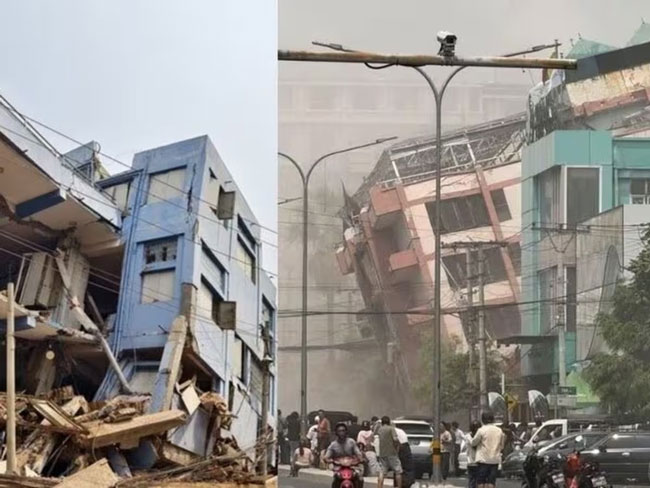
The recent twin earthquakes that struck Venezuela have once again reminded the world how fragile human life is in the face of nature’s overwhelming power. Within moments, violent tremors shook buildings, disrupted lives, and triggered widespread panic across several regions, including the capital city Caracas. While rescue and relief operations continue, the incident has reopened discussions on some of the most devastating earthquakes in human history—events that claimed hundreds of thousands, and in some cases millions, of lives.
Despite advances in science and technology, earthquakes remain one of the least predictable and most destructive natural disasters. The Venezuelan tremors serve as a stark reminder that beneath the surface of modern civilization, powerful geological forces are constantly at work.
Shaanxi Earthquake, China (1556): The Deadliest in History
The Shaanxi earthquake of 1556 is considered the deadliest earthquake ever recorded. Striking China’s Shaanxi province, it is estimated to have killed around 830,000 people. Most residents at the time lived in cave dwellings carved into fragile loess soil, which collapsed instantly during the quake. Entire communities were wiped out within seconds, leaving behind one of the darkest chapters in human history.


Tangshan Earthquake, China (1976): A City Erased in Seconds
On July 28, 1976, a powerful 7.8 magnitude earthquake struck Tangshan, an industrial city in China. Official figures report around 240,000 deaths, though some estimates suggest the toll could be even higher. Within seconds, the entire city was reduced to rubble. Infrastructure collapsed completely, and millions were left homeless, making it one of the most catastrophic disasters of the 20th century.
Indian Ocean Earthquake and Tsunami (2004): A Global Tragedy
On December 26, 2004, a massive 9.1 magnitude earthquake off the coast of Indonesia triggered one of the deadliest tsunamis in recorded history. The towering waves devastated coastal regions across Indonesia, India, Sri Lanka, Thailand, and several other countries. Approximately 230,000 people lost their lives, and millions were displaced. The disaster highlighted the transnational nature of seismic catastrophes.
Haiti Earthquake (2010): A Nation in Ruins
The 2010 earthquake in Haiti struck near the capital, Port-au-Prince, with a magnitude of 7.0. Already one of the poorest countries in the Western Hemisphere, Haiti suffered catastrophic damage. Government buildings, hospitals, and residential areas collapsed. Death toll estimates range from 100,000 to over 300,000. The disaster exposed the vulnerability of underdeveloped infrastructure to seismic shocks.
Haiyuan Earthquake, China (1920): A Forgotten Catastrophe
The Haiyuan earthquake of 1920 in China caused massive destruction, killing approximately 270,000 people. Landslides and secondary disasters worsened the impact, isolating entire regions and making rescue efforts nearly impossible at the time.
Venezuela’s Recent Tremors: A Warning Signal
The recent twin earthquakes in Venezuela, with strong magnitudes occurring within seconds of each other, have caused structural damage and widespread fear. Authorities have declared emergency response measures as assessments continue. While the full extent of casualties and destruction is still being evaluated, the event underscores the ongoing seismic risks faced by many regions around the world.
The Unchanging Reality of Earthquakes
Seismologists emphasize that earthquakes cannot be prevented, only anticipated and mitigated. They are caused by continuous movements of tectonic plates beneath the Earth’s crust. As urban populations grow and cities expand vertically, the potential impact of such disasters increases significantly.
The Venezuelan earthquake serves as yet another reminder that human progress, however advanced, still exists within the boundaries of nature’s unpredictable forces. Each major earthquake not only reshapes landscapes but also leaves behind lessons on preparedness, resilience, and the urgent need for stronger disaster management systems.