

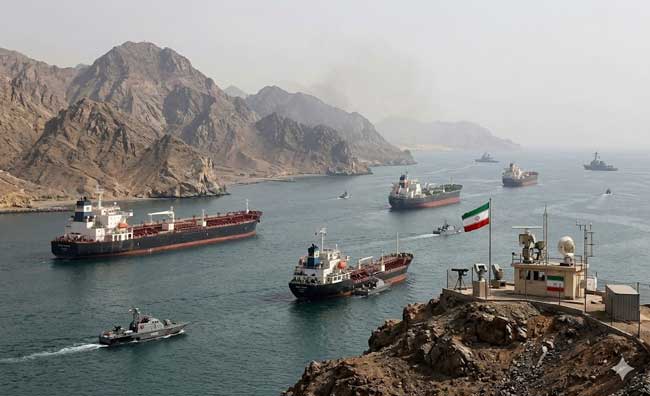
For months, the Strait of Hormuz has symbolized the fragility of the modern world. A narrow stretch of water connecting the Persian Gulf to the global economy became the center of geopolitical anxiety, military posturing, and economic uncertainty. Every threat exchanged between Washington and Tehran echoed far beyond the Middle East, shaking oil markets, unsettling governments, and reminding the world how dependent global stability remains on a few volatile choke points.
Now, with former U.S. President Donald Trump suggesting that there is a “good chance” of reaching a deal with Iran, the possibility of reopening the Strait of Hormuz has once again brought cautious optimism. Yet the larger question remains: has the world truly moved closer to peace, or merely stepped back from the edge of another dangerous escalation?
The significance of Hormuz cannot be overstated. Nearly a fifth of the world’s oil supply moves through this corridor. Any disruption immediately impacts fuel prices, inflation, shipping costs, and ultimately the lives of ordinary people across continents. The recent tensions demonstrated how quickly regional hostility can transform into a global economic crisis.


What makes this moment particularly important is the growing realization that military pressure alone cannot produce lasting stability in the Gulf. Despite aggressive rhetoric, sanctions, naval deployments, and repeated threats, neither side achieved a decisive breakthrough. Instead, the region drifted closer to confrontation while the global economy paid the price.
The involvement of Gulf nations in pushing for de-escalation also reflects a changing regional mindset. Countries like Saudi Arabia, Qatar, and the UAE increasingly understand that perpetual instability threatens their own economic ambitions. Their efforts to encourage dialogue reveal a pragmatic shift from confrontation toward strategic balance.
However, diplomacy in the Middle East has rarely been linear. One statement can calm markets in the morning and another can trigger panic by nightfall. Iran continues to insist that it will respond strongly to any attack, while Washington maintains that military options remain available if negotiations fail. This means the current calm is fragile, dependent not only on political will but also on restraint.
The broader lesson here is uncomfortable but unavoidable: the world economy remains dangerously vulnerable to geopolitical ego and strategic miscalculation. Energy routes should never become bargaining chips in power struggles between nations. Yet history repeatedly shows that when diplomacy weakens, trade routes become battle lines.
If the Strait of Hormuz fully reopens and tensions ease, the immediate beneficiary will be the global economy. Oil prices may stabilize, shipping confidence may return, and markets may breathe easier. But the deeper victory would not be economic—it would be diplomatic. In an era increasingly defined by wars, sanctions, and polarized alliances, even a temporary success for negotiation carries immense value.
Peace in the Gulf may still be uncertain. But for now, the world is once again being reminded that dialogue, however imperfect, remains cheaper than conflict and infinitely less destructive.