

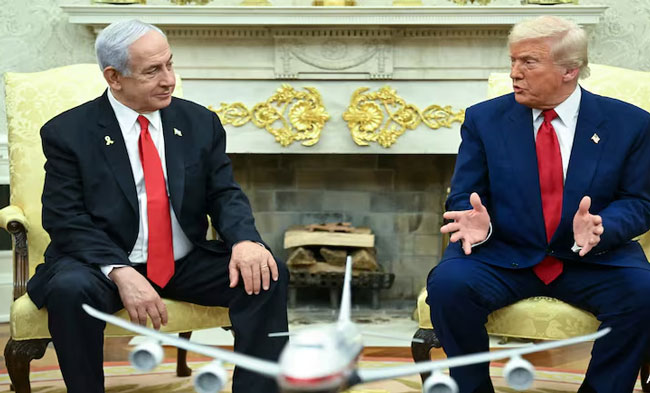
A striking claim has emerged regarding Israel’s long-standing push for military action against Iran. According to former U.S. Secretary of State John Kerry, three American presidents—George W. Bush, Barack Obama, and Joe Biden—rejected proposals from Israeli Prime Minister Benjamin Netanyahu for a military strike on Iran, while former President Donald Trump later approved a version of the plan.
“All Three Said No,” Says Kerry
Speaking on The Late Show with Stephen Colbert, John Kerry revealed that discussions about potential military action against Iran had taken place across multiple U.S. administrations. He said Netanyahu had repeatedly pushed for a military approach to counter Iran’s nuclear ambitions.
Kerry stated:
“All three presidents said no—President Bush said no, President Obama said no, and President Biden said no. I was present for those conversations.”


According to Kerry, the consistent refusal was rooted in a shared preference among these administrations to exhaust diplomatic solutions before considering military action.
Shift in Approach Under Trump
Kerry further claimed that the policy stance shifted during Donald Trump’s presidency. Unlike his predecessors, Trump took a more aggressive approach toward Iran, including withdrawing the United States from the 2015 Iran nuclear deal (JCPOA).
This move significantly altered U.S. relations with Iran and strengthened strategic alignment with Israel on regional security concerns. Reports suggest that under Trump, discussions around military options against Iran gained more traction than in previous administrations.
Diplomacy vs. Military Action Debate
Kerry emphasized that earlier administrations were influenced by the consequences of past conflicts such as Iraq and Vietnam, which shaped their reluctance to engage in another major Middle East war.
He argued that diplomacy remained the preferred route, and military escalation was seen as a last resort due to the potential for widespread regional instability.
Broader Geopolitical Implications
The claim highlights ongoing tensions in U.S.–Israel–Iran relations and raises fresh questions about how different administrations have handled one of the most sensitive geopolitical issues of the last two decades.
While the statements have not been independently verified by official government records, they have already sparked renewed debate over Middle East policy, nuclear negotiations, and the balance between diplomacy and military deterrence.
Conclusion
Kerry’s remarks add a new dimension to the long-standing discourse on Iran’s nuclear program and U.S. foreign policy decisions. As global tensions continue to evolve, the contrasting approaches of successive U.S. presidents remain a key factor shaping the region’s strategic landscape.