
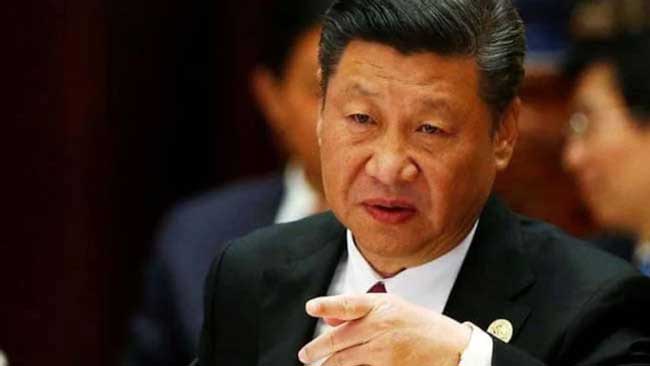
China’s internal politics is once again at the center of global attention. Under President Xi Jinping’s leadership, recent months have witnessed a series of major administrative and military reshuffles that have sparked renewed debate about stability and power dynamics within Beijing’s political system. The key question is not whether changes are happening, but what these changes truly signify.
Reports suggest that several senior military and political officials have been removed from their posts, placed under investigation, or reassigned. Officially, these actions are described as part of an anti-corruption drive and an effort to strengthen discipline within the system. Yet in politics, especially at this level, interpretation often carries more weight than official explanation.
This is why many international analysts are hesitant to view these developments as routine administrative reform. When leadership changes occur across multiple sensitive institutions simultaneously, they are rarely seen as isolated events. Instead, they are often interpreted as signals—signals of internal pressure, shifting balances of power, or structural realignment within the ruling framework.


Some foreign media reports have gone further, suggesting the possibility of internal dissatisfaction or even factional tensions within the upper ranks of the Chinese Communist Party. However, none of these claims have been independently verified, which adds another layer of uncertainty to an already opaque situation.
Beijing, for its part, has remained largely silent on these interpretations. The Chinese government has consistently framed such actions as part of a broader effort to combat corruption and improve governance efficiency. But in international politics, silence itself is often read as a form of communication—sometimes deliberate, sometimes strategic.
The central question remains whether these developments represent routine enforcement of discipline within a tightly controlled system, or whether they indicate deeper shifts in internal power structures. Is this an attempt to further consolidate authority, or a response to emerging internal pressures?
At this stage, there is no conclusive evidence to support any definitive interpretation. What is clear, however, is that these developments are being viewed internationally as more than routine bureaucratic changes. They are being read as political signals—signals whose true meaning may only become clear with time.
For now, the situation remains suspended in uncertainty, where power is visible, silence is loud, and questions continue to outnumber answers.