

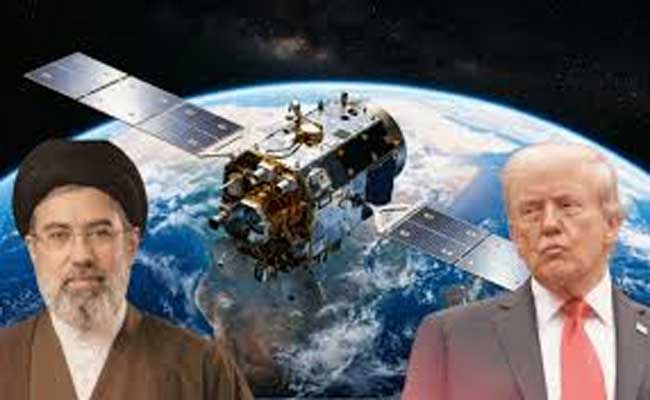
Space has rapidly evolved from a domain of scientific exploration into a critical arena of modern warfare, intelligence gathering, and geopolitical competition. A recent international media report has triggered fresh debate by alleging that Iran used a China-built satellite system to monitor U.S. military installations across the Middle East. If substantiated, the claim underscores a significant shift in how space technology is being integrated into global security dynamics.
What the report claims
According to investigative reports cited in international media, a commercially developed remote-sensing satellite—built by a Chinese company—was allegedly transferred into Iranian operational control. The satellite, reportedly part of a commercial Earth observation system, is said to have been utilized by Iran’s Islamic Revolutionary Guard Corps (IRGC) for intelligence gathering and regional surveillance.
The report further suggests that imagery collected through the satellite may have been used to monitor U.S. military bases in strategic locations across the Middle East, including Iraq, Jordan, and the Gulf region, where American defense infrastructure is heavily concentrated.


The blurred line between commercial and military space use
One of the most significant concerns raised by this case is the increasingly blurred distinction between commercial and military applications of space technology. Modern Earth observation satellites are primarily designed for civilian purposes such as agriculture, climate monitoring, disaster management, and urban planning.
However, advances in high-resolution imaging and real-time data transmission have made it possible for the same systems to be repurposed for strategic surveillance. This “dual-use” nature of satellite technology has become a growing challenge for global regulators and security experts alike.
China’s position and strategic sensitivities
The report has also drawn attention to China’s role in the commercial space sector. While the satellite in question is said to have been developed by a private Chinese firm, Beijing has firmly denied any involvement in military applications or intelligence sharing.
China maintains that its space industry operates within commercial boundaries and does not participate in military operations of foreign states. Nevertheless, the situation raises broader questions about oversight, end-use control, and the strategic implications of privately operated space infrastructure in global geopolitics.
Iran’s potential intelligence advantage
If the allegations are accurate, Iran’s access to satellite-based surveillance capabilities could represent a significant enhancement of its intelligence infrastructure. In a region already marked by heightened military tensions and complex security rivalries, real-time satellite imagery provides a critical advantage in monitoring troop movements, installations, and strategic assets.
Such capabilities could improve operational planning, situational awareness, and response time in the event of escalating regional conflicts.
Implications for global security architecture
This development highlights a deeper structural issue in contemporary international security: the rapid militarization of space through non-military channels. Existing legal frameworks, including the Outer Space Treaty, were established in an era when space technology was far less advanced and primarily state-controlled.
Today, however, the proliferation of private space companies and commercial satellite networks has created regulatory gaps that are increasingly difficult to manage. The absence of clear global norms governing dual-use satellite data raises concerns about transparency, accountability, and escalation risks among major powers.
Conclusion
The alleged use of a Chinese-built commercial satellite by Iran for monitoring U.S. military bases reflects a broader transformation in the nature of modern conflict. Space is no longer a passive observational domain—it has become an active intelligence frontier.
As commercial technology continues to merge with strategic defense applications, the international community faces an urgent challenge: redefining the rules of engagement in space before technological capability outpaces regulatory control.