
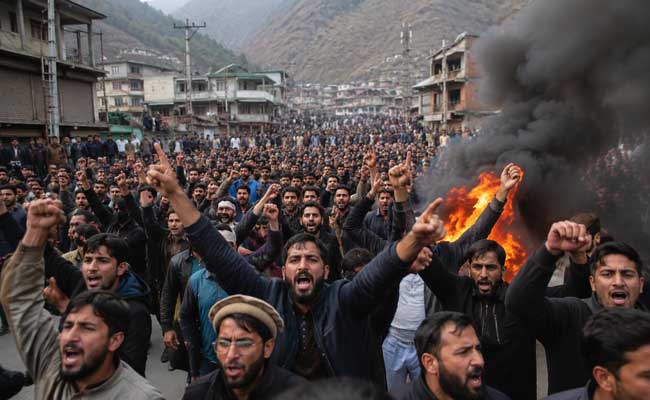
Desk : A protest movement that began with demands for subsidised flour and lower electricity tariffs in Pakistan-occupied Kashmir (PoK) has evolved into a broader wave of public unrest, highlighting growing economic and political discontent across the region.
The agitation, led by the Joint Awami Action Committee (JAAC), was initially focused on rising inflation, soaring electricity costs, and the restoration of subsidies on essential commodities. Protesters argued that local residents were bearing the burden of economic hardship despite the region’s natural resources and strategic importance.
In recent months, demonstrations have intensified across several towns and cities. Clashes between protesters and security forces have reportedly resulted in casualties and injuries, further fueling public anger. Markets have shut down in many areas, and normal life has been disrupted by strikes and protest marches.
Authorities in Pakistan-occupied Kashmir have taken a tough stance against the movement. The administration has reportedly imposed restrictions on protest activities and announced measures against key leaders of the Joint Awami Action Committee. Human rights groups and civil society organizations have expressed concern over the use of force against demonstrators.
Observers note that the movement is no longer limited to economic grievances. Protesters are increasingly raising issues related to political representation, governance, local rights, and control over regional resources. Many participants claim that years of economic neglect and administrative shortcomings have contributed to the growing dissatisfaction.
Security has been tightened across the region, with additional police and paramilitary personnel deployed in sensitive areas. While PoK Prime Minister Faisal Mumtaz Rathore has called for dialogue and a peaceful resolution, the protests continue to gain momentum.
Political analysts believe that what started as an economic protest has transformed into a wider expression of public frustration. They warn that unless the concerns of the people are addressed through meaningful reforms and dialogue, the unrest could develop into a deeper political challenge for the authorities.