
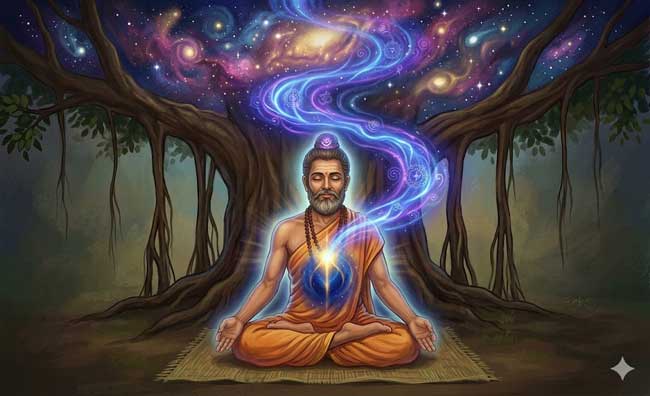
 Yoga is far more than a system of physical exercises or a method of maintaining good health. It is a profound spiritual discipline that seeks to harmonize the body, mind, and soul, ultimately guiding an individual toward self-realization and union with the Divine. While modern society often associates yoga with flexibility, fitness, and stress management, its true essence lies in its spiritual depth and transformative power.
The word “Yoga” is derived from the Sanskrit root Yuj, meaning “to unite” or “to join.” At its core, yoga represents the union of the individual self with the universal consciousness. It is a path that enables human beings to transcend the limitations of the material world and discover the eternal reality within themselves.
Ancient Indian sages recognized that most human suffering originates from the restless nature of the mind. Desires, fears, attachments, anger, and ego constantly disturb inner peace. The great sage Patanjali defined yoga in his famous Yoga Sutras as “Yoga Chitta Vritti Nirodhah,” meaning “Yoga is the cessation of the fluctuations of the mind.” When the mind becomes calm and disciplined, a person begins to experience the deeper dimensions of existence.


The spiritual significance of yoga lies in its ability to help individuals discover their true nature. In daily life, people identify themselves with their professions, relationships, possessions, and social roles. Yoga encourages a deeper inquiry: Who am I beyond these temporary identities? Am I merely the body and the mind, or is there something more enduring within me? According to yogic philosophy, every individual possesses an eternal consciousness that transcends birth and death. The realization of this inner truth is the ultimate goal of yoga.
The Bhagavad Gita presents yoga through various paths, each suited to different temperaments and stages of spiritual growth. Karma Yoga emphasizes selfless action without attachment to results. Bhakti Yoga nurtures devotion and surrender to the Divine. Jnana Yoga encourages the pursuit of wisdom and self-inquiry, while Raja Yoga focuses on meditation and mental discipline. Though their approaches differ, all these paths lead toward the same destination: spiritual awakening and union with the Supreme Reality.
One of yoga’s most valuable spiritual teachings is the art of living in the present moment. Human beings often remain trapped between the regrets of the past and the anxieties of the future. Yoga trains the mind to become fully aware of the present. In that state of awareness, one discovers inner peace, clarity, and contentment that are independent of external circumstances.
In the modern world, technological progress and material abundance have brought unprecedented convenience, yet stress, loneliness, and emotional unrest continue to rise. In such an environment, yoga serves as more than a wellness practice; it becomes a spiritual necessity. It offers a path back to inner balance and reminds individuals that lasting happiness cannot be found solely in external achievements but in the realization of one’s inner divine nature.
The ultimate message of yoga is simple yet profound: know yourself. As self-awareness deepens, one begins to perceive the interconnectedness of all life. Compassion replaces division, wisdom overcomes ignorance, and a sense of universal harmony emerges. Yoga teaches that true transformation begins within and radiates outward into every aspect of life.
Yoga is not merely the art of bending the body; it is the discipline of humbling the ego. It is not only an exercise of breath but a celebration of awakened consciousness. Rather than encouraging withdrawal from the world, yoga empowers individuals to live within it with greater peace, purpose, balance, and spiritual awareness.
For thousands of years, yoga has illuminated the path toward inner freedom. Its timeless wisdom continues to guide humanity, reminding us that the greatest journey is not outward but inward—a journey from the self to the Supreme.