
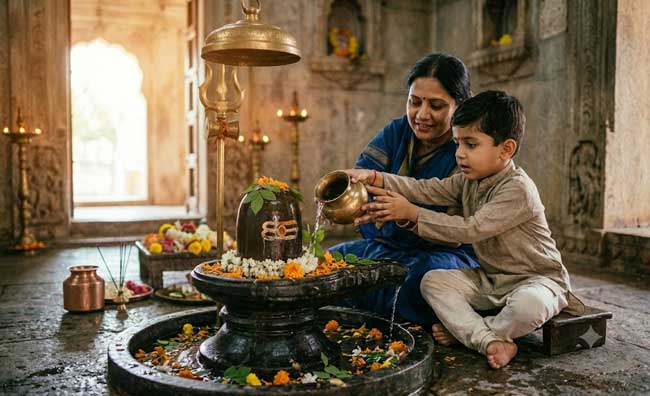
In Indian spiritual tradition, offering water on the Shivling is not merely a ritual practice but a profound  expression of faith, symbolism, and inner awakening. This ancient tradition carries layers of meaning rooted in nature, philosophy, and self-realization.
Water — A Symbol of Life and Purity
Water is considered the fundamental element of life in Indian philosophy. It purifies not only the body but also represents the cleansing of the mind and consciousness. When a devotee pours water on the Shivling, it symbolizes the inner desire to wash away impurities, ego, and negative tendencies.


Water is naturally cooling. It represents calmness, balance, and emotional stability. Thus, offering water is not just an external act, but an inward movement toward peace and clarity.
Shivling — The Symbol of Formless Consciousness
The Shivling is not worshipped as an idol in a physical sense, but as a representation of the infinite, formless consciousness of Lord Shiva. It symbolizes an eternal energy that has no beginning and no end.
When water is offered to the Shivling, it reflects the surrender of the limited human self to the infinite universal consciousness. It is an act of dissolving ego and embracing humility.
The Ritual of Abhishek and Its Meaning
The act of Abhishek—pouring water, milk, honey, or sacred Ganga water on the Shivling—is a form of spiritual discipline. Its purpose is not only to please the deity but to purify the inner self of the devotee.
The continuous flow of water teaches a deeper truth: life is constantly changing. Just as water never remains still, human life too should remain flowing, free from rigidity and ego.
Harmony Between Nature and Spirituality
Shiva worship deeply integrates natural elements. Water, air, fire, earth, and space are all symbolically connected with Shiva’s cosmic form. Offering water is a reminder that humans are not separate from nature.
It also emphasizes the importance of balance with nature. Disconnection from natural harmony leads to inner imbalance, while alignment brings peace and stability.
Devotion and the Spirit of Surrender
While offering water on the Shivling, a devotee is not just performing a ritual but expressing devotion and surrender. This surrender is not born out of fear, but out of trust, reverence, and love.
It helps dissolve ego and nurtures humility within the individual.
A Path to Inner Purification
Just as water cleans external dust, spiritual practice and devotion help cleanse inner impurities such as anger, greed, and ego. This is why offering water is seen not just as worship, but as a process of inner purification.
The tradition of offering water on the Shivling reminds us that spirituality is not about external display, but about inner transformation and awakening.