
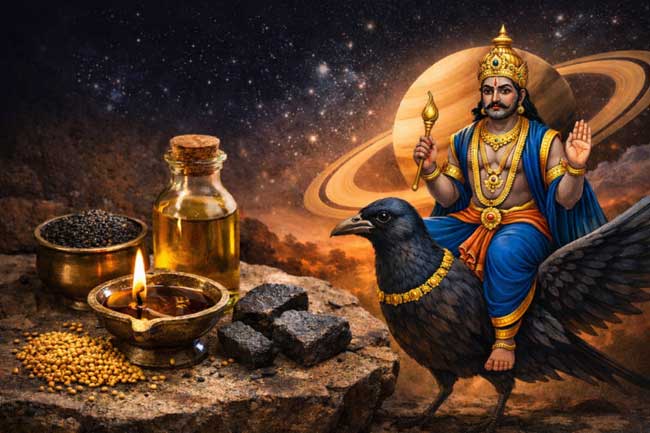
 In Hindu tradition, rituals are not merely acts of devotion; they are symbolic expressions of philosophy, psychology, and cosmic balance. One such widely practiced ritual is offering mustard oil to Lord Shani on Saturdays. This custom, deeply rooted in scripture, mythology, and social consciousness, carries meanings far beyond superstition.
Lord Shani: The Deity of Karma and Discipline
Lord Shani, associated with the planet Saturn, is regarded as the divine administrator of karma. He rewards or punishes individuals strictly according to their actions. Unlike deities associated with instant grace, Shani Dev represents patience, justice, discipline, and endurance. His influence is believed to be slow yet transformative, compelling individuals to face consequences and grow through responsibility.
Saturday is considered Shani’s day because Saturn governs this day astrologically, making it especially suitable for prayers and offerings dedicated to him.


Why Mustard Oil?
The offering of mustard oil is not accidental; it is layered with symbolic and practical meaning.
1. Symbol of Hardship and Humility
Mustard oil has traditionally been associated with the working class and rural life. Its strong smell, pungent taste, and heating nature reflect austerity and endurance—qualities closely aligned with Lord Shani’s character. Offering mustard oil signifies acceptance of hardship and humility before the law of karma.
2. Cooling Shani’s Stern Gaze
According to popular belief, Lord Shani’s gaze (drishti) is intense and severe. The dark, heavy nature of mustard oil is believed to absorb or soften this intensity. Lighting a lamp with mustard oil is seen as a symbolic act of reducing the harsh effects of Saturn in one’s life.
3. Connection with Saturn’s Nature
In Vedic astrology, Saturn is described as cold, slow, dark, and heavy. Mustard oil, being thick and dark, is considered astrologically compatible with Saturn’s energy. Offering substances aligned with a planet’s nature is believed to harmonize its influence.
Scriptural and Mythological References
Several Puranic stories reinforce this practice. In some legends, Lord Shani is described as having a dark complexion and suffering physical discomfort. It is said that applying oil provided him relief, leading to the tradition of oil offerings. While such stories are symbolic rather than literal, they emphasize compassion toward suffering and acknowledgment of restraint and penance.
Texts related to Shani worship often emphasize donations of oil, black sesame seeds, iron, and dark clothing—items connected to Saturn’s attributes.
Social and Ethical Dimension
Beyond astrology, this ritual carries a strong ethical message. Shani Dev is especially sensitive to injustice, exploitation, and arrogance. Offering mustard oil on Saturdays is often accompanied by charity—feeding the poor, helping laborers, or assisting the disabled. Thus, the ritual encourages social responsibility and empathy for those who live difficult lives.
Psychological Significance
At a psychological level, worshiping Shani teaches acceptance, patience, and accountability. The act of offering something simple and austere like mustard oil reminds devotees that life’s struggles are not punishments but lessons meant to refine character.
Conclusion
Offering mustard oil to Lord Shani on Saturdays is not a blind ritual but a symbolic practice rooted in cosmic philosophy, social ethics, and inner discipline. It reflects a deeper understanding that growth often comes through restraint, responsibility, and acceptance of life’s challenges. In honoring Shani Dev with mustard oil, devotees symbolically acknowledge the dignity of labor, the inevitability of karma, and the transformative power of endurance.
Such traditions endure not because of fear, but because they offer a framework to understand suffering, justice, and personal evolution.