
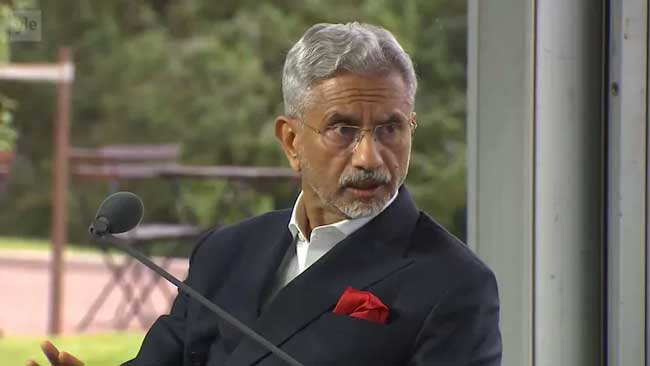
Helsinki: External Affairs Minister S. Jaishankar has defended India’s decision to continue purchasing oil from Russia after the 2022 Ukraine conflict, while sharply criticising what he described as “double standards” in Western policies on energy trade and sanctions.
Speaking at an event in Finland’s capital Helsinki, Jaishankar said India’s decision was driven by energy security and market realities rather than political alignment. He argued that the move was necessary to ensure stability in global oil prices during a period of supply disruption.
Responding to criticism over India’s oil imports from Russia, the Foreign Minister said India buys oil based on cost and availability. He rejected suggestions that India was being overly sympathetic towards Russia.

Jaishankar further stated that at the time, a significant portion of global oil supply was coming from Russia, while European countries were increasing their purchases of Middle Eastern oil, traditionally supplied to countries like India. He described Russia as a “steady supplier” in the global energy market.
He also claimed that the United States had, at the time, encouraged India to purchase Russian oil to help stabilise global energy prices. However, he pointed to what he called inconsistent shifts in US sanctions policy on Russian energy, saying the issue should not be viewed through a moral or “sanctimonious” lens.
Criticising changing Western positions on Russian energy trade, Jaishankar said that sanctions and subsequent waivers reflected a lack of consistent principle. He argued that global energy decisions were largely driven by practical considerations rather than moral framing.
On trade tensions, he referred to past US tariff actions on Indian goods, including penalties linked to India’s Russian oil imports, and noted that such measures had been adjusted following diplomatic understandings between the two countries.
Jaishankar also commented on what he called “moral ambiguity” in Europe’s approach to global conflicts. He said European countries have long engaged in arms sales that, in some cases, end up being used in conflicts elsewhere, while India has not engaged in actions that threaten Europe.
Reiterating India’s position, he said the country’s energy policy is guided by national interest, economic viability, and energy security, and will continue to be based on those principles.