

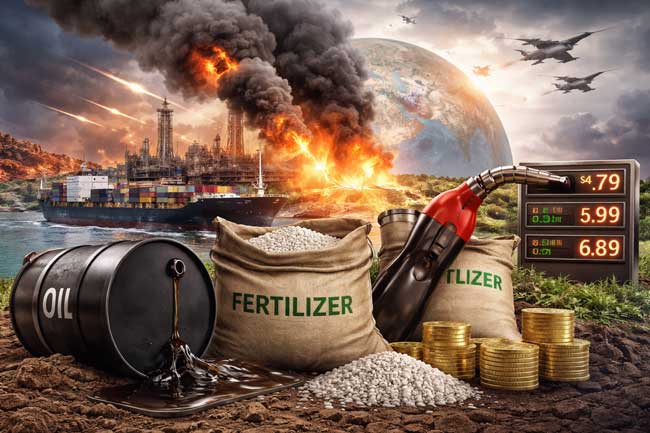
The ongoing war in Iran is no longer just a regional conflict; its effects are being felt globally, affecting economies, energy supply, agriculture, healthcare, and daily life. India is not immune. So far, 8 Indian citizens have lost their lives in the Middle East, and disruptions in oil and gas supplies have created economic challenges.
The impact is not limited to India. Neighboring Pakistan has instructed government employees to work from home and has raised petrol and diesel prices sharply. China, Brazil, Australia, South Korea, Thailand, Bangladesh, and several other countries are also experiencing serious consequences.
Below is a detailed analysis of 11 major impacts of the Iran war worldwide:


Fertilizer Shortage
A large portion of the world’s fertilizers passes through the Strait of Hormuz, which has now been disrupted due to the conflict. U.S. sanctions on Venezuela have further reduced supply. Australia, a major wheat producer, has reduced the area under cultivation this year. Indian farmers are worried about rising fertilizer costs, which could affect food production and global food security.
Energy Crisis in South Korea
The South Korean government has asked citizens to take shorter showers to save energy. Much of the energy used to heat water is imported from West Asian countries. The war has disrupted this supply, intensifying the energy crisis and affecting daily routines.
Thailand: Office Dress and AC Usage Adjustments
The Thai government has encouraged employees to wear lighter clothes and reduce air conditioner usage to conserve energy. This highlights how the conflict has intensified the global energy crisis, impacting everyday life.
Daily Life Affected in the Philippines and Egypt
The Philippines has instructed government employees to limit the use of escalators, while Egypt has reduced the number of shopping days. These measures show how energy shortages are now directly affecting daily activities.
Bangladesh’s Garment Industry Halted
Bangladesh’s economy relies heavily on the garment sector. Finished goods are stuck at airports due to flight cancellations. This disruption is affecting both the country’s economy and the livelihoods of millions of people.
Healthcare Supply Disruptions
Cargo hubs in Dubai and Doha have been closed, affecting the supply of critical medicines, including cancer treatments. Patients in India and other countries are facing delays in accessing life-saving medications.
Helium Gas Shortage
About one-third of the world’s helium comes from Qatar. Supply disruptions are affecting the production of party balloons, medical equipment, and high-tech industries.
Entertainment Industry Impact
Saudi Arabia and Bahrain have postponed the Formula 1 race due to security concerns. International shows by pop stars like Shakira and Christina have also been canceled. The war is now affecting the global entertainment industry and public events.
Inflation and Housing Prices in the U.S.
Petrol and diesel prices in the U.S. have risen, driving up inflation. Housing costs are also increasing, creating global economic pressure and investor uncertainty.
Reduced Sugar Production in Brazil
Brazil is prioritizing biofuel production over sugar, reducing sugar output. This could affect global sugar prices and the food industry worldwide.
Gold and Investments Declining
Even traditionally safe investments like gold are seeing a decline. Public holidays have been declared in Sri Lanka, and Laos has implemented a three-day school policy. These measures highlight the broad social and economic impact of the conflict.
Conclusion:-The Iran war is no longer just a regional issue. Its effects are being felt across food, energy, healthcare, economic stability, and social life worldwide. India and neighboring countries must prepare for its long-term consequences.