
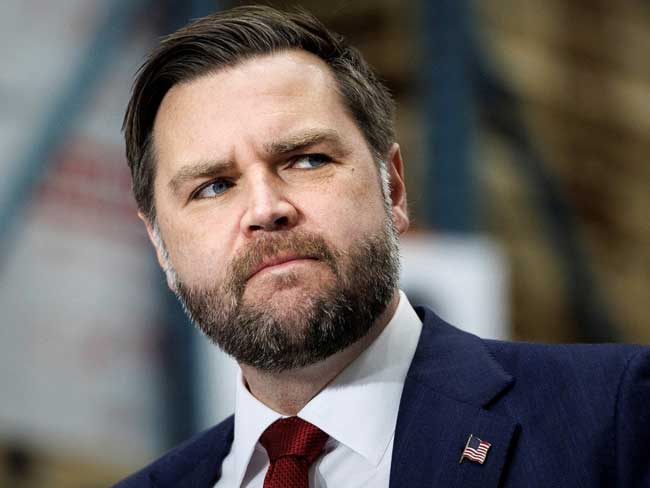
The recent diplomatic engagement between the United States and Iran has once again drawn global attention—not only for its strategic implications but also for the controversial perception of Pakistan’s alleged intermediary role. What was initially seen as a potential backchannel contribution by Islamabad has now become a subject of renewed skepticism, particularly after remarks made by US Vice President J.D. Vance added a sharp political edge to the discussion.
According to reports, ongoing discussions between Washington and Tehran on Iran’s nuclear program and broader regional security architecture had opened limited space for third-party diplomatic facilitation. Pakistan, given its geographical proximity and historical ties with both the West and Iran, was at times informally viewed as a possible conduit. However, this narrative has become more complicated following Vance’s public comments on press freedom conditions within Pakistan.
His remarks, which highlighted concerns over restrictions on freedom of expression, have sparked a strong reaction within Pakistan’s political and media circles. While the comments were not directly linked to the US–Iran negotiations, their timing has amplified sensitivities in Islamabad, where questions of international credibility and internal governance often intersect in foreign policy debates.

For Pakistan, the situation underscores a recurring diplomatic challenge: managing external perceptions while navigating internal political realities. Any suggestion of mediation or strategic relevance in high-stakes negotiations—such as those involving Iran’s nuclear ambitions—is closely scrutinized by global powers. In this case, the added layer of criticism regarding media freedoms risks complicating Pakistan’s attempt to position itself as a constructive regional stakeholder.
On the other side, the US–Iran dialogue itself remains fraught with uncertainty. Within American political circles, there is ongoing debate about the scope, transparency, and enforceability of any potential agreement. Critics argue that partial or opaque arrangements could shift regional power balances and create long-term strategic instability, particularly in the already volatile Middle East security environment.
Vice President Vance’s indication that economic relief for Iran would be contingent upon verifiable limitations to its nuclear program reflects a familiar Washington stance—linking diplomatic progress with strict compliance mechanisms. Yet, such conditional diplomacy often faces challenges in implementation, especially when mutual distrust remains high.
In this broader context, Pakistan’s perceived involvement—whether formal or informal—illustrates the complexities of modern diplomacy, where even indirect association with major negotiations can influence a country’s international image. The controversy surrounding Vance’s remarks has therefore done more than trigger a bilateral rhetorical exchange; it has reopened discussions about Pakistan’s role, reliability, and reputation in sensitive geopolitical processes.
Ultimately, the episode reflects a larger truth about contemporary international relations: perception often travels faster than policy, and even unconfirmed roles can become diplomatic liabilities when global attention intensifies.