
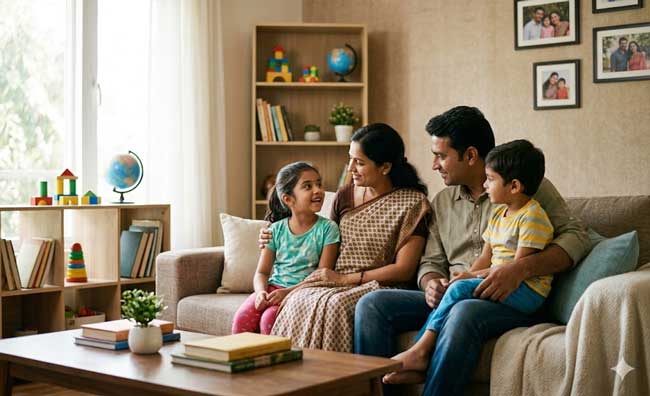
A child’s behaviour and manner of speaking form the foundation of their personality. The environment they grow up in plays a decisive role in shaping how they interact with others in society. Therefore, it is essential for parents and guardians not only to teach discipline but also to instil values of respect, courtesy, and thoughtful communication.
Parents as the First Role Models
Children learn more from observation than instruction. They closely watch how their parents speak and behave in everyday situations. If communication at home is calm, respectful, and considerate, children naturally adopt the same habits. On the other hand, frequent use of harsh words or raised voices can also become a learned behaviour. Thus, parents serve as the most powerful influence in shaping a child’s conduct.
Guidance Matters More Than Punishment
Correcting a child through anger or punishment may stop undesirable behaviour temporarily, but it does not create lasting change. Instead, explaining mistakes in a calm and understanding manner is far more effective. Children should be guided to understand what went wrong and how they can respond better in similar situations in the future.


A Respectful Home Environment Shapes Attitude
A home where people listen to each other and value each other’s opinions naturally nurtures respectful behaviour in children. When children see that every voice is acknowledged and no one is ignored, they learn the importance of respect in communication. Such an environment becomes the foundation of their social behaviour.
Importance of Polite Words
Simple words like “please,” “thank you,” and “sorry” carry great significance in shaping a child’s communication style. These are not just formal expressions but tools of respect and empathy. Teaching children to use polite language helps them build positive relationships and leaves a lasting impression on others.
Balancing Freedom with Responsibility
Children should be encouraged to express their thoughts freely, but they must also learn that the way they express themselves matters. There is a clear difference between expressing disagreement respectfully and speaking rudely. Understanding this distinction helps children develop emotional maturity and balanced communication skills.
Patience and Consistency Are Key
Behavioural change in children does not happen overnight. It is a gradual process that requires consistent effort and patience from parents. Repeated guidance, gentle reminders, and positive reinforcement play a crucial role in helping children adopt respectful habits over time.
Conclusion
Teaching children respectful behaviour is not about a single lesson or instruction. It is the result of a continuous process shaped by family environment, parental behaviour, and consistent guidance. When a home fosters respect, patience, and understanding, children naturally absorb these values and carry them forward into their lives.