
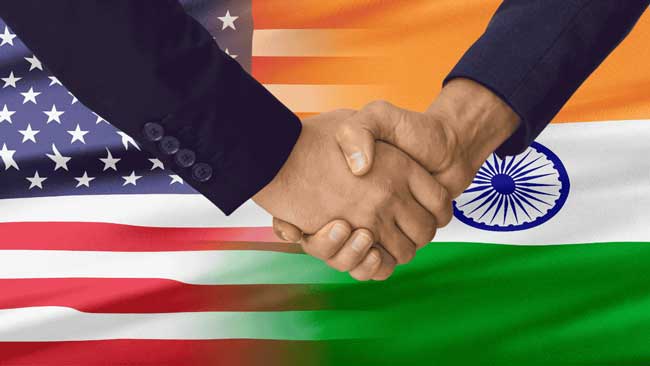
The United States has signalled renewed momentum in its trade negotiations with India, with senior officials indicating that an interim trade agreement is now close to completion. According to US State Department spokesperson Tommy Pigott, trade remains a top priority for President Donald Trump’s administration, and further rounds of meetings with the US Trade Representative (USTR) are expected in the near term to finalise the deal.
Pigott underscored that Washington views “balanced trade relationships” as essential to unlocking the full economic potential of bilateral ties. He argued that such balance not only strengthens the partnership between the two countries but also enables broader economic expansion on both sides. His remarks reflect a consistent policy direction from Washington, which has increasingly emphasised fairer trade frameworks with key partners, including India.
Adding to this momentum, the US Ambassador to India, Sergio Gor, described the ongoing negotiations as being in their final stages. Speaking at the US-India TRUST Initiative event at IIT Delhi, he noted that only “a small fraction” of issues—referred to as the last one percent—remained unresolved. According to him, both sides have recently exchanged negotiating teams, with another round of discussions scheduled in the coming days to iron out outstanding clauses.

The Ambassador expressed confidence that the agreement could be signed within weeks or months, signalling strong political will on both sides to conclude the long-pending framework. He also highlighted the remarkable growth in bilateral trade, which has surged from around $20 billion to over $220 billion over the past two decades, reflecting the expanding depth of economic engagement between the two democracies.
Beyond trade figures, US officials have repeatedly emphasised India’s evolving role as a strategic partner. The Ambassador described India as increasingly central not only to US economic interests but also to broader global strategic calculations. This framing highlights a shift in the bilateral relationship—one that now extends well beyond traditional commerce into technology, supply chains, defence cooperation, and geopolitical alignment.
The ongoing negotiations also come at a time when global trade dynamics are undergoing significant realignment. With supply chain diversification becoming a priority for major economies, India’s position as a manufacturing and services hub has gained renewed attention in Washington’s strategic outlook.
If concluded successfully, the interim trade agreement is expected to mark a new phase in US–India economic relations—one defined by deeper integration, reduced trade frictions, and enhanced cooperation across emerging sectors. However, the final outcome will depend on whether both sides can resolve remaining technical and policy differences in the coming weeks, as currently anticipated.