

The conflict in Iran has now entered its second month, with serious implications for regional and global security. On the very first day of the US and Israeli airstrikes, reports emerged that Iran’s Supreme Leader, Ayatollah Ali Khamenei, had been killed—a shock that sent tremors through Tehran and beyond. Experts suggested that the US aimed to force a leadership change in Iran, but so far, there has been no concrete indication of such a shift.
Despite the loss of several top leaders, Iran’s stance remains firm. There have been no signs of unconditional surrender, and Khamenei’s son, Mojtaba, has assumed command with an aggressive posture, intensifying regional tensions.
US Strategy and Possible Ground Invasion
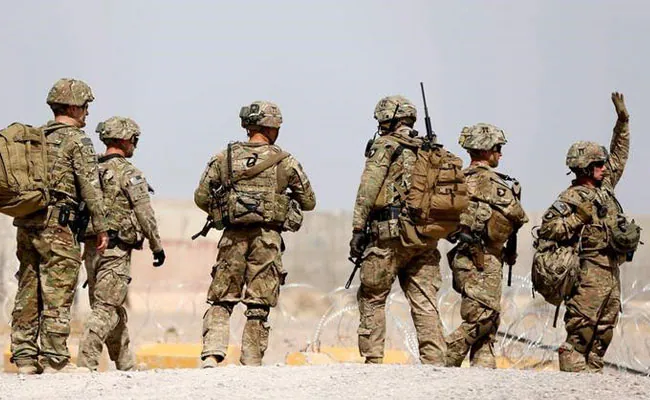
Sources indicate that the US is preparing for a potential ground operation in Iran. President Donald Trump could announce such a move at any time. However, such an operation carries substantial risks. A ground offensive would likely involve urban warfare, forcing American troops to enter Iran’s densely populated cities and narrow streets—a scenario fraught with complexity and danger.


Urban Warfare Risks:
- Conventional heavy weapons such as missiles and artillery have limited effect in urban environments.
- Narrow streets and complex building layouts favor local forces, who can maneuver more efficiently.
- External forces face heightened risks of ambushes and operational traps due to unfamiliarity with the terrain.
Russia’s experience in Ukraine offers a cautionary tale. Despite technological superiority and heavy artillery, Russian forces became bogged down in urban areas, struggling against localized resistance.
Expert Analysis
Dr. Jayprakash Singh, Assistant Professor at Himachal Pradesh Central University and a specialist in hybrid warfare, notes:
“Urban warfare favors Iran because it knows the terrain intimately and can target American troops using drones and local intelligence. The conflict can turn into building-by-building fighting, with unpredictable attacks from multiple directions. Estimating where and when strikes will occur is extremely difficult, giving local forces a tactical advantage. This is exactly what Russia faced in Ukraine.”
Analysts suggest that for the US, this challenge could be as complex as its previous engagements in Afghanistan, Iraq, and Vietnam. Success in urban warfare requires not just military might but precise knowledge of the terrain and adaptive strategy.
Impact on Global Oil Markets and International Security
Iran is a key oil exporter in the Gulf region. Escalation of conflict or a ground invasion could disrupt global oil supply and affect prices worldwide. European and Asian economies may face significant economic pressure. The UN and other international bodies remain vigilant as tensions mount.
Experts emphasize that the US will confront not only a military challenge but also a political and economic test. In a ground offensive, American forces must navigate urban warfare, local resistance, and global political scrutiny simultaneously.
Conclusion
The US-Iran standoff is approaching a direct confrontation threshold. In urban combat conditions, Iran could gain strategic advantages. Despite technological and aerial superiority, success in city-by-city combat will not be easy for the US. The scenario has broader implications for global oil markets, international politics, and regional security.
Analysts agree that this conflict is not merely a military engagement but a complex struggle involving strategy, local knowledge, and global diplomacy.