

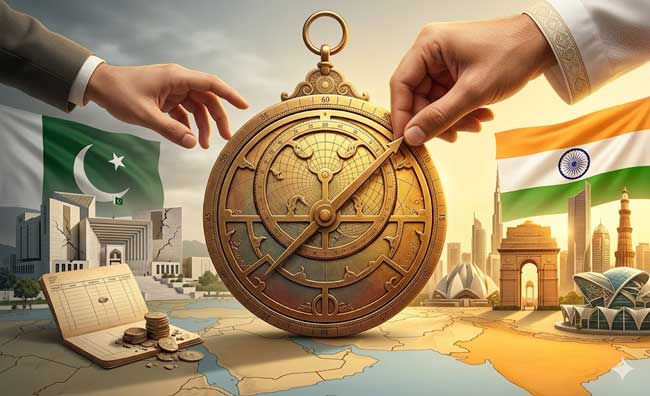
The relationship between the United Arab Emirates (UAE) and Pakistan appears to be entering a period of visible strain, marked by financial pressure, workforce restructuring, and shifting geopolitical priorities. At the same time, UAE’s engagement with India is deepening across economic and strategic sectors, signaling a broader realignment in regional partnerships.
Recent developments indicate that Pakistan is facing multiple setbacks from its Gulf partner, raising concerns over its already fragile economic stability.
Pakistan’s Economic Strain Intensifies

One of the most significant developments has been the UAE’s reported demand for early repayment of a multi-billion-dollar loan extended to Pakistan. According to reports, Pakistan was compelled to return approximately $3.45 billion earlier than expected, placing additional pressure on its foreign exchange reserves, which remain under strain due to ongoing economic instability.
This repayment has further tightened Pakistan’s fiscal space at a time when it is already dependent on international financial assistance and IMF support programs.
Workforce Reductions Add to Concerns
Adding to the pressure, reports suggest that Etihad Airways, a major UAE-based carrier, has undertaken workforce reductions that include Pakistani employees. While companies often restructure for operational efficiency, the move has been interpreted as part of a broader tightening environment affecting Pakistani nationals working in the Gulf region.
For Pakistan, which relies heavily on remittances from expatriates in the Middle East, such developments carry both economic and social implications.
Waning Investment Confidence
Another worrying signal for Islamabad is the apparent reassessment of UAE-linked investments in Pakistan. Key sectors such as energy, telecommunications, and infrastructure are reportedly witnessing caution from Gulf investors.
This shift reflects growing concerns about Pakistan’s economic volatility, policy uncertainty, and repayment capacity. For a country already struggling to attract stable foreign investment, this trend could further slow down economic recovery efforts.
UAE Deepens Strategic Engagement with India
In contrast, UAE’s relationship with India continues to expand at a rapid pace. Bilateral trade between the two countries has crossed significant milestones and is on track toward ambitious future targets. Cooperation now extends well beyond traditional trade into energy security, technology, defence, and digital infrastructure.
High-level diplomatic engagements have further reinforced this partnership, positioning India as one of UAE’s most important strategic allies in Asia.
This growing alignment reflects a broader shift in UAE’s foreign policy approach—one that prioritizes economic resilience, long-term strategic value, and diversified global partnerships.
A Changing Regional Equation
The contrasting trajectories of UAE’s relationships with Pakistan and India highlight a deeper geopolitical transition.
Pakistan appears to be facing increasing financial scrutiny and reduced leverage, while India is emerging as a stable and expanding partner for Gulf economies seeking growth and diversification.
Analysts suggest that UAE’s policy shift is not driven by sentiment, but by pragmatic economic and strategic calculations. In a rapidly evolving global order, investment security, political stability, and market potential are becoming decisive factors.
Conclusion :-The latest developments underline a clear message: Gulf diplomacy is becoming more selective and strategic. Pakistan is confronting rising economic challenges and diminishing financial flexibility, while India is consolidating its position as a key partner for UAE’s long-term ambitions.
This evolving dynamic is likely to reshape not only bilateral ties but also the broader geopolitical balance across South Asia and the Middle East in the years ahead.