
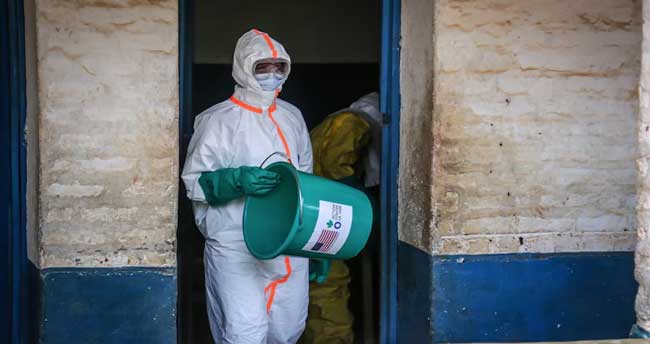
Desk : The United States is reportedly moving forward with plans to establish a quarantine and treatment facility in Kenya for American citizens who are exposed to Ebola in Africa, according to media reports citing U.S. officials.
The proposed facility is part of Washington’s response to the ongoing Ebola outbreak in the Democratic Republic of Congo (DRC) and nearby regions. It is intended to house and treat Americans who may have been exposed to the virus or who test positive while in the region, rather than immediately transporting them back to the United States.
Officials say the move is designed to reduce the risks associated with long-distance medical evacuation and to allow faster isolation and treatment closer to the outbreak zone. The facility is expected to be operated with support from the U.S. Departments of Defense, State, and Health and Human Services, and staffed by public health professionals.


Kenyan government approval is still pending, and discussions between Washington and Nairobi are ongoing. Kenyan authorities have confirmed engagement with international partners on Ebola preparedness but have not yet formally endorsed the specific proposal.
The plan marks a significant shift in U.S. policy compared to earlier Ebola outbreaks, when infected or exposed Americans were typically repatriated for treatment in specialized biocontainment units within the United States.
The proposal has drawn criticism from some public health experts, who argue that relocating patients abroad could raise ethical concerns and potentially complicate access to the highest level of medical care. Others, however, view the move as a pragmatic step to contain risk and manage exposure more efficiently in regions closer to the outbreak.
The Ebola outbreak in central Africa has prompted heightened global concern, with several countries tightening travel restrictions, screening passengers, and strengthening quarantine protocols.
The World Health Organization has previously declared the outbreak a public health emergency of international concern, as authorities continue efforts to prevent further spread across borders.