
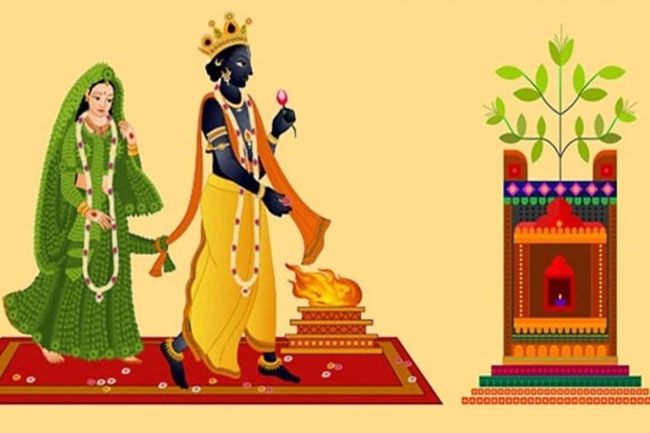
In Hinduism, Tulsi Vivah is taken into account one of the crucial sacred and auspicious festivals. It’s celebrated yearly on the Dwadashi tithi (twelfth day) of the intense fortnight of the month of Kartik, a day after Dev Uthani Ekadashi.  In keeping with the Sanatan custom, Tulsi is thought to be an incarnation of Goddess Mahalakshmi, and he or she is lovingly known as Vishnupriya, as she is deeply beloved to Lord Vishnu.
It’s believed that on Dev Uthani Ekadashi, Lord Vishnu awakens from His four-month-long divine slumber (Yoga Nidra). With His awakening, all auspicious and ceremonial actions start. The next day, the holy wedding ceremony of Goddess Tulsi and Lord Vishnu (within the type of Shaligram) is carried out with full devotion and conventional rituals. In lots of areas of India, this competition is widely known for 5 days, culminating on Kartik Purnima. Married ladies observe fasts on today for the lengthy life and prosperity of their husbands and households.
Tulsi Vivah 2025: Auspicious Timing
Tithi Begins: November 2, 2025, at 7:31 AM
Tithi Ends: November 3, 2025, at 5:07 AM
Predominant Celebration: November 2, 2025 (Sunday)

Auspicious Muhurta:
- Brahma Muhurta — 4:50 AM to five:42 AM
- Amrit Kaal — 9:29 AM to 11:00 AM
- Abhijit Muhurta — 11:42 AM to 12:26 PM
- Vijay Muhurta — 1:55 PM to 2:39 PM
- Godhuli Muhurta — 5:35 PM to six:01 PM
- Tripushkar Yoga — 7:31 AM to five:03 PM
- Sarvartha Siddhi Yoga — 5:03 PM to six:34 AM (November 3)
- Nishita Muhurta — 11:39 PM to 12:31 AM (November 3)
Rituals for Tulsi Vivah
- Set up the Tulsi plant in your courtyard, balcony, or temple.
- Beautify a lovely mandap round Tulsi with colourful rangoli.
- Supply a sari, bangles, chunari, and different adornments to Goddess Tulsi.
- Place Lord Shaligram (a type of Vishnu) on the fitting facet of Tulsi.
- Bathe each with holy Ganga water; apply sandalwood paste to Shaligram and vermilion (roli) to Tulsi.
- Supply flowers, sweets, sugarcane, water chestnuts, and panchamrit.
- Gentle incense and lamps, and start the marriage rituals.
- Don’t supply rice on Shaligram; as an alternative, use white sandalwood or sesame seeds.
- Recite mantras and carry out seven circumambulations (pheras) across the sacred pair.
- Conclude the ceremony with an aarti and distribute prasadam amongst all devotees.
Non secular Significance of Tulsi Vivah
Performing Tulsi Vivah is taken into account equal to performing Kanyadaan (the sacred act of giving a daughter in marriage). It’s believed that devotees who conduct this ritual with devotion are blessed with peace, prosperity, and happiness. Goddess Tulsi, being a type of Mahalakshmi, bestows divine grace upon her devotees. Single ladies who take part within the ritual are believed to obtain blessings for an acceptable and desired life associate.
Tulsi Puja Mantra
Tulasi shri-mahalakshmi vidya-vidya yashasvini,
Dharmya dharmanana devi devadeva-manah priya.

Labhate sutaram bhaktim ante vishnu-padam labhet,
Tulasi bhur-mahalakshmih padmini shri harapriya.