

The relationship between India and the USA is witnessing a notable pressure, following U.S. President Donald Trump’s imposition of excessive tariffs on Indian imports. Initially, a 25% reciprocal tariff was launched, however in a current escalation associated to India’s oil imports from Russia, Trump added an extra 25% obligation, pushing the whole tariff to a staggering 50%. This improvement has prompted India to recalibrate its worldwide alliances, turning nearer towards China and Russia.
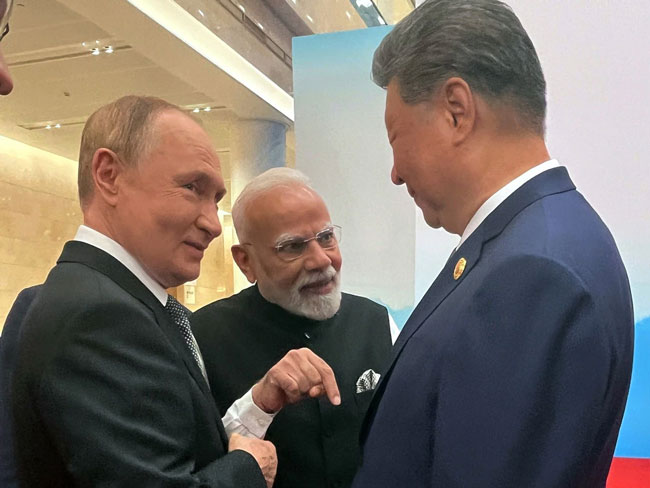
The geopolitical shift is obvious. India and China, beforehand tense over border disputes, at the moment are shifting towards renewed engagement. The current Shanghai Cooperation Group (SCO) summit in Tianjin, China, highlighted this development. Prime Minister Narendra Modi, Chinese language President Xi Jinping, and Russian President Vladimir Putin have been photographed participating in cordial discussions, a picture that quickly went viral on social media. Analysts interpret these interactions as a transparent sign of a strengthening trilateral bond, sending an unmistakable message to the Western powers, significantly the USA.
Reacting to the summit, President Trump posted on social media platform Fact: “It appears now we have misplaced India and Russia into the deepest, darkest fingers of China. Might their future be lengthy and affluent.” The put up additionally included the enduring {photograph} of Modi, Putin, and Xi collectively, underlining the strategic anxiousness in Washington.


Trump’s more and more agency stance towards India marks a shift in his second time period. Past tariffs, he has publicly criticized China for its current navy parade, which showcased superior fighter jets, drones, and missiles. The parade was attended by leaders from Russia, Pakistan, and North Korea. Commenting on the occasion, Trump remarked, “An excellent present, however I do know why they have been doing it. They thought I used to be watching. I used to be watching.”
Strategists argue that these developments underscore a altering geopolitical panorama in South and East Asia. Whereas the U.S. should rethink its method to conventional allies, India seems to be leveraging this second to claim its geopolitical independence, balancing ties with world powers whereas advancing its strategic pursuits.
The 50% tariff controversy and India’s recalibrated diplomacy mirror greater than financial friction; they symbolize a refined however vital shift within the world energy matrix, with India navigating a brand new period of strategic decisions amid an more and more multipolar world.