
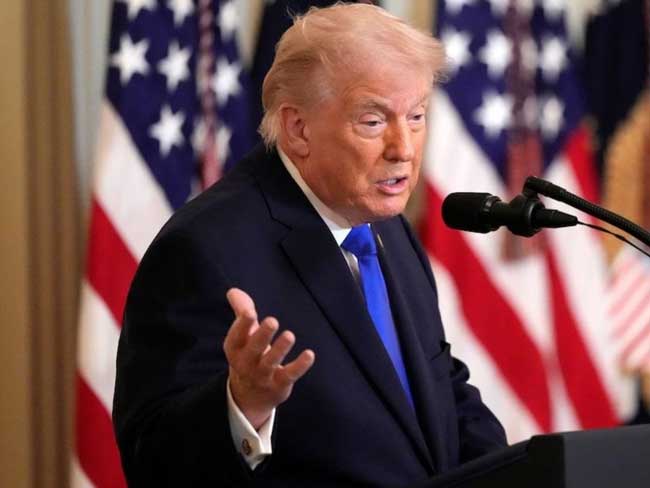
Washington. US President Donald Trump has strongly rejected media reports questioning the nuclear scope of his proposed agreement with Iran, asserting that the framework clearly prevents Tehran from acquiring nuclear weapons.
In a post on his social media platform Truth Social, Trump dismissed reports, including those from CNN, as “fake news” and insisted that the draft deal contains explicit and strict provisions on Iran’s nuclear status. He said the agreement clearly states that Iran will not be allowed to possess nuclear weapons. According to him, the document also includes detailed provisions on broader nuclear-related safeguards, adding that “most of the agreement is about nuclear issues.”
Trump’s remarks come just days after he described the proposed deal as being “largely finalised.” However, he has since reportedly ordered extensive revisions to the draft, prolonging negotiations and adding new uncertainty to diplomatic efforts.


According to media reports, Trump raised demands during a key meeting with advisers for tougher language on Iran’s nuclear commitments and for provisions related to the reopening of the Strait of Hormuz. He has also expressed concerns over the level of economic relief that could be granted to Tehran under any agreement.
US officials have indicated that the broader objective of the talks is to halt hostilities, reopen the strategic waterway, and continue detailed negotiations on Iran’s nuclear programme. However, the latest round of discussions ended without a final decision.
Trump also stated on social media that the US would seize Iran’s highly enriched uranium stockpile and destroy it. Iran, however, has maintained that it is not discussing detailed aspects of its nuclear programme in the current negotiations.
Differences also persist over financial arrangements. While Trump said there had been no talks on monetary exchanges, Iran insists that any agreement must include economic relief provisions.
Meanwhile, Iranian Parliament Speaker Mohammad Bagher Ghalibaf took a firm stance, saying no deal would be approved unless Tehran’s “rights” are secured. He also expressed distrust of US commitments, stating that Iranian negotiators rely only on concrete outcomes rather than promises.
On the US side, Democratic Senator Chris Coons of the Senate Foreign Relations Committee said that while Trump’s proposed terms appear reasonable on paper, their implementation could be difficult—particularly those related to the reopening of the Strait of Hormuz.
Amid shifting positions and ongoing revisions, uncertainty continues to surround the progress of the proposed US-Iran nuclear agreement.