
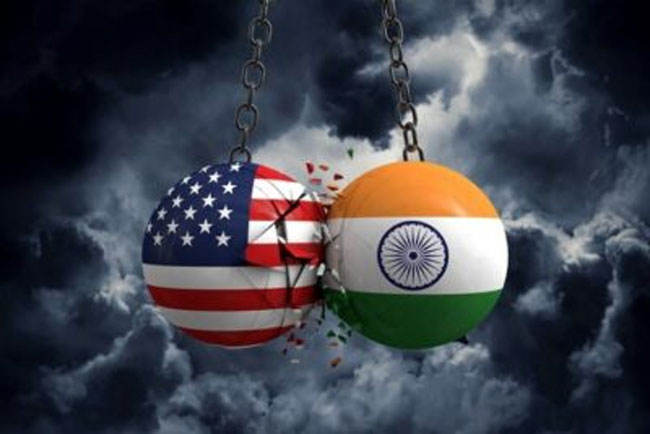
As India and the United States work to finalize a bilateral trade agreement, a new proposal from the Office of the United States Trade Representative (USTR) has introduced fresh uncertainty into the negotiations. The USTR has proposed imposing an additional 12.5% tariff on imports from India and 53 other countries, alleging their failure to effectively prohibit the import of goods produced through forced labor.
The proposal follows investigations launched by the United States against 60 countries over concerns that they have not adequately enforced restrictions on goods linked to forced labor. The timing of the move is particularly significant, as trade negotiators from both countries are currently engaged in discussions in New Delhi aimed at concluding a broader trade pact.
USTR Criticizes Trade Partners
U.S. Trade Representative Jamieson Greer said in a statement that the inability of major trading partners to prevent imports produced through forced labor is unacceptable.

“Our most important trading partners’ failure to prohibit the importation of goods made with forced labor is unacceptable. This creates an uneven playing field in which American workers face unfair global competition,” Greer said. “We will no longer tolerate this imbalance and will impose additional duties on countries that fail to comply.”
The proposal emerged from one of the investigations conducted under Section 301 of the U.S. Trade Act of 1974.
What Is Section 301?
Section 301 of the U.S. Trade Act of 1974 is a key legal mechanism that allows the United States to investigate foreign trade practices it considers unfair or discriminatory. The provision authorizes the U.S. government to take corrective action—including imposing tariffs or trade restrictions—if it determines that another country’s policies place an unreasonable burden on U.S. commerce or trade interests.
If an investigation finds that a country has adopted practices deemed harmful to American trade, Section 301 permits the U.S. administration to implement remedial measures such as higher tariffs, import restrictions, or other trade-related penalties.
India’s Response
India has rejected the allegations concerning forced labor and has urged Washington to withdraw the investigations. New Delhi maintains that such issues should be addressed within the framework of ongoing bilateral trade negotiations rather than through unilateral trade actions.
India’s Ministry of Commerce stated that the government remains engaged with the United States regarding the Section 301 proceedings while simultaneously working to finalize the broader trade agreement in accordance with the framework announced on February 2, 2026, and the joint statement issued on February 7, 2026.
Public Hearing Scheduled for July
According to the Ministry of Commerce, products already covered under Section 232 sectoral tariffs, along with certain other goods, would be exempt from the proposed additional duties.
The proposal also outlines a special mechanism for textile and apparel products, under which a specified quantity of imports from selected countries may continue to enter the U.S. market at lower tariff rates.
The ministry noted that the proposed tariffs are not yet final. Stakeholders may apply to participate in a public hearing until June 22, 2026, while written comments can be submitted until July 6, 2026. A public hearing is scheduled for July 7, 2026.
54 Countries Named
Greer acknowledged that some trading partners have taken initial steps to curb imports linked to forced labor, including commitments made under the United States-Mexico-Canada Agreement (USMCA) and various reciprocal trade arrangements.
However, he emphasized that further action is required. “Every trading partner must do more to ensure that global trade does not promote or sustain forced labor,” he said.
The USTR identified 54 countries that it believes have failed to adequately prohibit and enforce restrictions on imports made with forced labor. The list includes India, China, Japan, Brazil, Australia, the United Kingdom, Saudi Arabia, and several other major economies.
The proposal, if implemented, could have significant implications for global trade flows and may add complexity to the ongoing efforts by India and the United States to conclude a comprehensive trade agreement.