
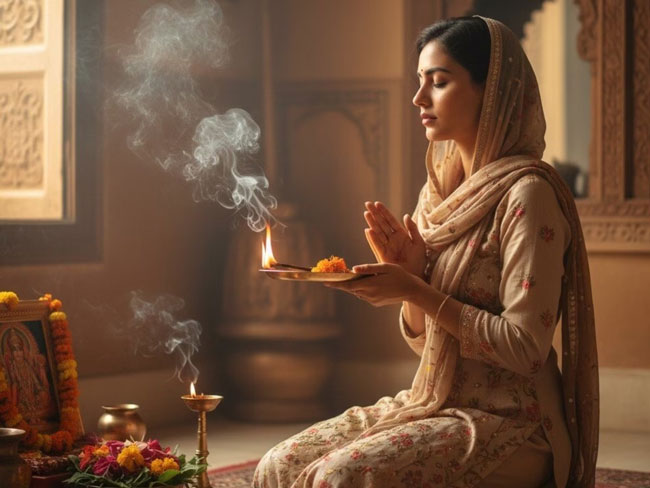
 In Hindu tradition, every act of worship—whether it is prayer, fasting, yajna, or any religious ritual—begins with a sankalp. It is not a mere formal statement, but a conscious spiritual commitment made by the devotee before the divine. Sankalp connects action with intention, transforming ritual into meaningful spiritual practice.
Meaning and Spiritual Essence of Sankalp
The word sankalp is derived from the Sanskrit roots sam (complete) and kalp (resolve or intention). It signifies a firm, conscious determination. Spiritually, sankalp represents the moment when a devotee aligns the mind, will, and purpose toward a sacred goal. It marks the transition from ordinary thought to focused spiritual awareness.
Giving Direction to Karma
In Hindu philosophy, karma is not judged by action alone, but by the intention behind it. Sankalp gives direction and clarity to one’s actions. Worship performed without sankalp may remain a physical act, but when guided by conscious intent, it becomes a living spiritual offering. Thus, sankalp ensures that the soul participates along with the body.


Self-Identification Before the Divine
During sankalp, the devotee traditionally states their name, lineage, place, time, and purpose of the ritual. This is not for the deity’s information, but for the devotee’s inner acknowledgment. It reflects humility, self-awareness, and acceptance of one’s circumstances while standing before the cosmic order.
Mental Focus and Inner Discipline
The human mind is naturally restless. Sankalp anchors it in the present moment and reminds the devotee why the ritual is being performed—whether for spiritual growth, gratitude, repentance, or self-purification. In the context of fasting, sankalp is especially vital, as it binds the individual to discipline, restraint, and conscious self-control.
Scriptural Foundation
Vedic and Dharmashastra traditions emphasize that charity, penance, japa, or fasting performed without sankalp does not yield complete spiritual merit. Sankalp is described as the “seed of intention,” from which the fruit of karma grows. The Bhagavad Gita also underscores that action becomes meaningful only when guided by awareness and purpose.
Relevance in Modern Life
Even in contemporary life, the principle of sankalp remains deeply relevant. It teaches that no action—spiritual or worldly—reaches fulfillment without clarity of intention and mental commitment. Taking sankalp before worship becomes a reminder of mindful living, responsibility, and conscious action in everyday life.
Conclusion
Sankalp in Hindu spiritual tradition is not a ritualistic formality, but a declaration of awareness. It signifies that the devotee is not merely asking for blessings, but stepping into a process of inner refinement. This is why taking a sankalp before worship or fasting is considered essential—because without intention, devotion loses its direction and depth.