
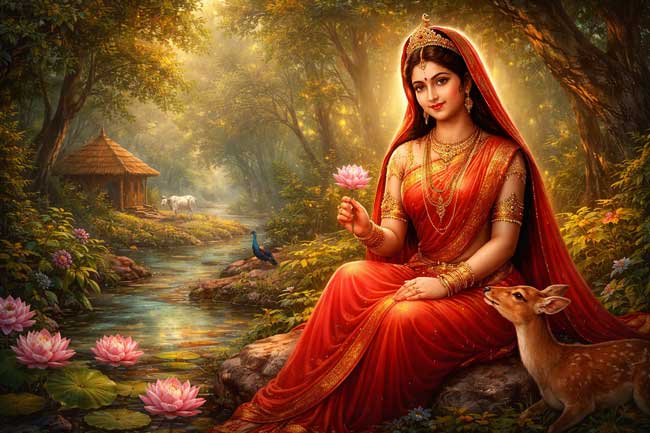
 In the Indian civilizational tradition, certain dates are more than festivals—they are living memories of culture, consciousness, and moral thought. Sita Ashtami is one such occasion. It commemorates not merely the birth of Goddess Sita, but the emergence of a feminine consciousness that transformed strength into inner resolve, endurance into self-respect, and values into a way of life.
Sita is often remembered only as a symbol of tolerance and sacrifice, but this understanding is incomplete. Endurance born out of helplessness is weakness; endurance rooted in inner strength becomes power. Sita’s patience belonged to the latter. Exile in the forest, abduction, solitude in Ashoka Vatika, and the ordeal of the fire—these were not just episodes of suffering, but testimonies to an unshakable moral and spiritual strength that refused to compromise with injustice.
Sita’s strength did not lie in weapons, but in conviction. Standing firm before Ravana’s threats and grandeur required courage no less than that of a battlefield. Even in captivity, she did not surrender her dignity, faith, or moral clarity. Hers was a form of strength that arises not from dominance, but from deep inner certainty.


Sita Ashtami also reminds us that values are not merely inherited traditions or spoken teachings—they are lived principles. Sita’s values are reflected in her conduct: reverence for her parents, partnership in marriage, compassion for all living beings, and harmony with nature. As the daughter of the Earth, her bond with nature symbolizes balance—between humanity and the natural world, duty and compassion.
In contemporary times, when strength is often mistaken for aggression and endurance for submission, the message of Sita Ashtami becomes profoundly relevant. The festival teaches us that true strength lies in restraint, true endurance in self-respect, and true values in moral courage—especially during adversity.
Sita Ashtami is not merely a remembrance of the past; it is a dialogue with the present. It asks us difficult questions: Do we truly understand the meaning of strength? Is our endurance born of courage or fear? Are our values limited to ritual, or do they guide our actions?
On this day, Sita should be remembered not only as a revered goddess, but as a living ideal—a woman who remained silent yet was never weak, who endured without surrendering her dignity, and who transformed values into her greatest source of strength.
Sita Ashtami, ultimately, is a celebration of that consciousness where strength, endurance, and values are not opposites, but three dimensions of the same truth.