

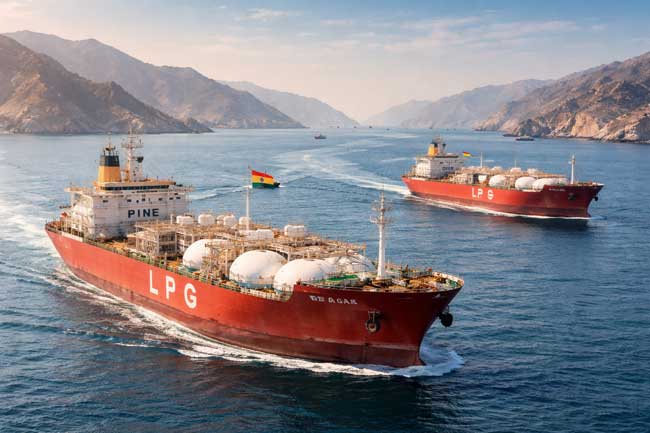
New Delhi: The Strait of Hormuz, one of the world’s most critical maritime energy routes, is gradually showing signs of returning to normalcy, offering relief to global energy markets and import-dependent countries like India.
According to reports, a liquefied natural gas (LNG) carrier vessel linked to the United Arab Emirates successfully completed its passage through the strategically important waterway. The vessel, identified as Umm Al-Ashtan, safely navigated the route and continued its journey towards its destination near India. Its movement has been confirmed through maritime tracking data.
The development is being viewed as a positive signal for stability in Strait of Hormuz, a narrow but vital passage through which a significant share of global crude oil and LNG shipments pass daily. Any disruption in this region has a direct impact on global energy prices and supply chains.


The recent safe transit comes after a period of heightened tensions and security concerns in the region, which had disrupted shipping activity and raised fears of prolonged instability. Several vessels were reportedly affected during the earlier phase of uncertainty, causing pressure on global energy logistics.
For India, the development carries particular significance, as the country relies heavily on imported LNG to meet its growing energy demand. Improved stability in this maritime corridor is expected to strengthen India’s energy security and ensure smoother supply flows.
However, experts caution that while the recent movement indicates improvement, the situation cannot yet be considered fully stable. Maritime security in the region remains sensitive, and continuous monitoring is essential to ensure sustained normalcy.
Overall, the successful passage of the LNG carrier is being seen as a reassuring development for global energy markets, signalling a possible easing of disruptions in one of the world’s most strategically important shipping lanes.