
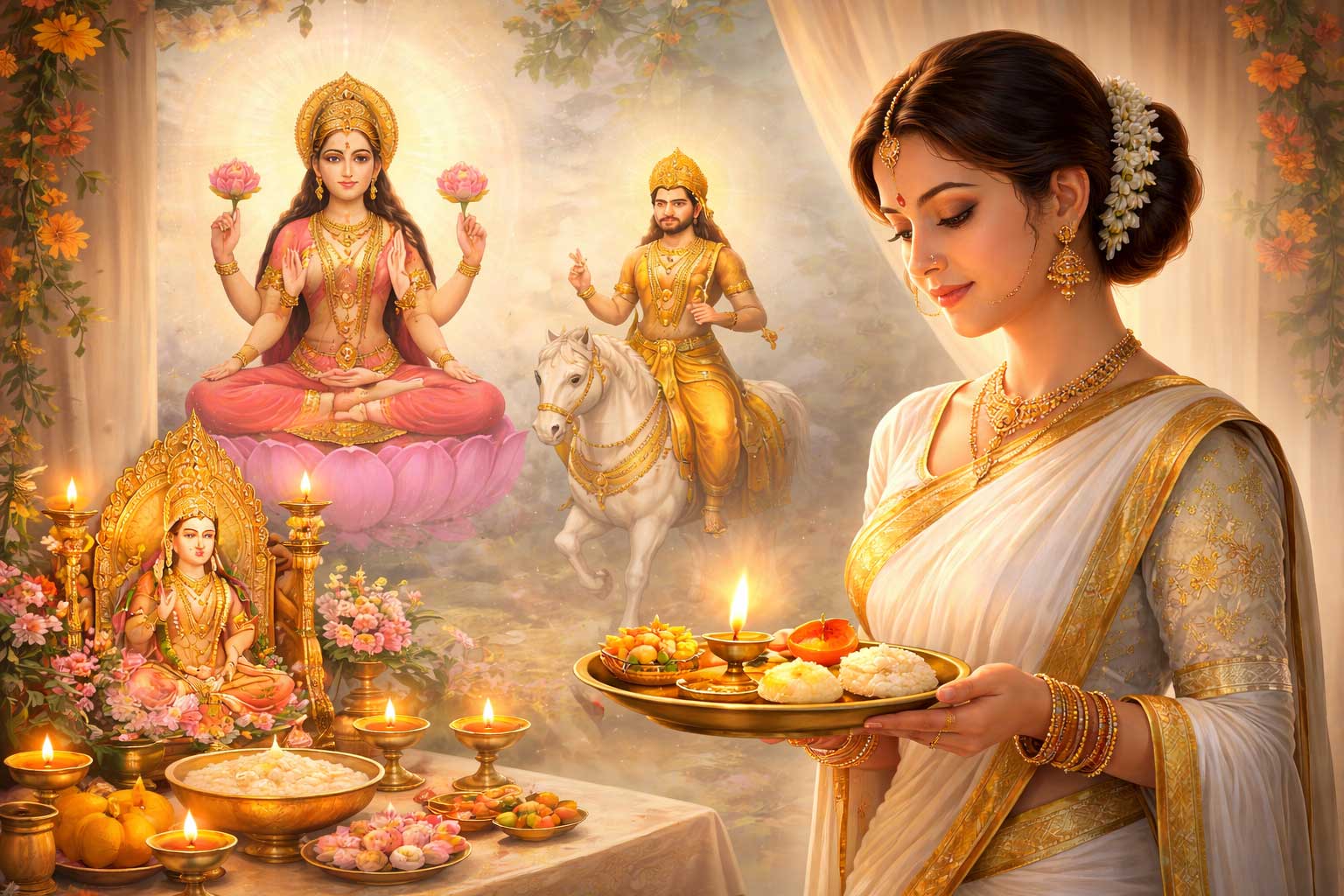
 In Indian life, vrat (fasting or observances) are not mere religious rituals; they are subtle practices that bring discipline, balance, and sensitivity into one’s life. Each day of the week carries its own spiritual and mental significance. Among these, Shukrwar holds a special place, traditionally associated with Shukra Dev and Maa Lakshmi. This vrat is not limited to the desire for wealth alone; it is a way to cultivate beauty, compassion, self-restraint, and harmony in life.
Tradition: From Devotion to Cultivation
According to the scriptures, Shukra governs prosperity, love, art, beauty, and enjoyment. For this reason, the Shukrwar vrat is closely linked with household well-being, marital harmony, and familial prosperity. Traditional practices suggest wearing white clothes, offering sweet dishes such as kheer, and reciting Lakshmi Stotra or Shukra mantras on this day.
From rural villages to urban households, Shukrwar vrat has been observed with devotion, particularly by women. It is not merely a channel for personal wish fulfillment but a discipline that nurtures responsibility, restraint, and sacrifice for the family. The tradition teaches that enjoyment and wealth are meaningful only when aligned with dharma (righteousness) and propriety.


Science: Effects on Body and Mind
Viewed through a scientific lens, Shukrwar vrat has several positive effects. The primary purpose of fasting or light observance is to give rest to the body and regulate the mind. Light meals or fasting toward the end of the week help balance the digestive system and replenish the body’s energy.
Mentally, the vrat encourages self-discipline and introspection. When one voluntarily restrains desires, the mind becomes steadier and more alert. The qualities associated with Shukra—pleasure, beauty, and joy—become truly meaningful when the mind learns to exercise control. Modern psychology also recognizes that self-restraint and discipline foster inner peace and mental clarity.
Intention: Cultivating Inner Wealth
Shukrwar vrat is not about external wealth alone; it offers an opportunity to awaken inner beauty and compassion. True Lakshmi does not manifest only as money but as contentment, goodwill, and sensitivity in life.
This observance reminds us that the purpose of life is not mere consumption but balanced joy. When enjoyment becomes a means and sentiment leads, beauty endures in life. Shukrwar vrat teaches that compassion, love, and gratitude constitute real prosperity.
Shukrwar Vrat in the Modern Context
In today’s consumerist and fast-paced society, where material acquisition is often seen as the measure of success, Shukrwar vrat provides a much-needed pause. It encourages reflection, self-assessment, and understanding whether we control our possessions or are controlled by them.
This vrat teaches modern individuals that wealth and comfort should enhance life, not hollow it. When we associate Shukra’s influence with emotion rather than indulgence, its true spiritual meaning unfolds.
Conclusion
Shukrwar vrat is a beautiful confluence of tradition, science, and intention. It teaches that prosperity arises not from accumulation but from balance. Rather than binding life with rigid rules, it inspires gentle discipline and sensitivity.
When devotion is guided by discernment and practice is strengthened by heartfelt intention, Shukrwar vrat transcends being a mere religious tradition—it becomes a silent spiritual practice that renders life beautiful, balanced, and meaningful.