
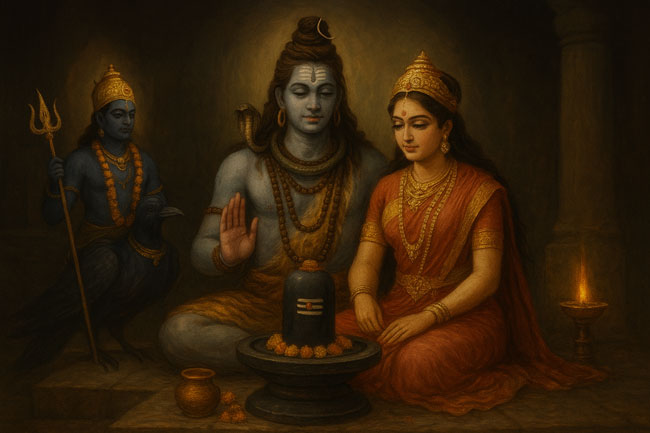
Shani Pradosh Vrat is a deeply revered observance in the Hindu spiritual tradition, dedicated to the worship of Lord Shiva and Lord Shani. It holds a unique place among devotional practices because it combines the blessings of Shiva’s compassion with Shani Dev’s principle of justice and karma.
This vrat is observed on the Trayodashi (13th lunar day) of both the waxing and waning phases of the moon. When this Trayodashi falls on a Saturday, it is specially known as Shani Pradosh Vrat, considered highly powerful and spiritually significant.
The time of Pradosh, which occurs during the twilight period after sunset, is believed to be an especially sacred window when divine energies are most accessible. In this subtle transition between day and night, spiritual practices are said to yield multiplied benefits, making prayers and meditation more effective.


Shani Pradosh Vrat is not merely a ritualistic observance but a reminder of the deeper law of karma. Lord Shani is regarded as the dispenser of justice, rewarding individuals strictly according to their actions. Therefore, this vrat encourages self-discipline, ethical conduct, patience, and responsibility in one’s life.
Devotees primarily worship Lord Shiva on this day by offering water, milk, bael leaves, dhatura, and sacred ash on the Shiva Linga. This act symbolizes surrendering the ego and purifying the inner self. Along with Shiva worship, prayers to Lord Shani are also offered to seek relief from hardships, delays, and karmic challenges.
It is believed that observing Shani Pradosh Vrat can reduce the adverse effects of Shani Sade Sati and Shani Dhaiya. Devotees often experience a sense of relief from prolonged obstacles, mental stress, and life stagnation. More importantly, the vrat strengthens inner resilience and patience.
The observance during the Pradosh period holds special importance. Lighting lamps, chanting Shiva and Shani mantras, and participating in evening prayers at temples are considered highly auspicious. These practices help calm the mind and bring spiritual clarity.
Beyond its ritual aspect, the vrat carries a profound life lesson: difficulties are not punishments but opportunities for correction and growth. While Lord Shani represents strict karmic law, Lord Shiva embodies compassion and liberation. Together, they symbolize the balance between discipline and grace.
Shani Pradosh Vrat is especially meaningful for those facing prolonged struggles, uncertainty, or emotional turbulence. It guides devotees toward patience, moral strength, and steadfastness in action.
In essence, Shani Pradosh Vrat is not just a religious practice but a spiritual discipline that helps an individual align with higher laws of life, awaken inner strength, and move toward a more balanced and conscious existence.