
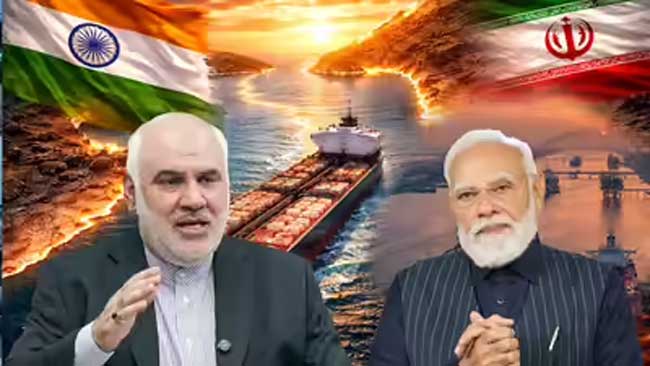
New Delhi: Iran has expressed optimism about restoring its energy partnership with India following the signing of a Memorandum of Understanding (MoU) between the United States and Iran aimed at ending decades of tensions and paving the way for sanctions relief.
In an exclusive interview with ANI, Iran’s Ambassador to India, Mohammad Fathali, said that the complete removal of sanctions could not only lead to the resumption of Iranian crude oil exports to India but also propel bilateral trade beyond its previous peak levels.
“Before the imposition of sanctions, Iran was at times among India’s top three crude oil suppliers, and the volume of bilateral trade exceeded USD 17 billion annually. These figures reflect the tremendous potential for economic and energy cooperation between our two countries,” Fathali said.


The envoy emphasized that Iran remains one of the world’s largest producers and exporters of oil and has consistently sought to make its energy resources available to countries that require them.
“India has historically been one of Iran’s most important oil customers, and energy cooperation between our two countries has a long and successful track record,” he noted.
Fathali highlighted India’s growing energy requirements and Iran’s ability to meet them through reliable and competitively priced supplies.
“Should sanctions be lifted and normal conditions restored, there is no doubt that Iran can once again become one of India’s principal oil suppliers,” he said.
The ambassador also expressed hope that sanctions relief would stimulate broader economic engagement between the two nations.
“We hope that with the complete removal of sanctions, not only will Iranian oil exports to India resume, but bilateral trade and joint investments will also surpass their previous peak levels and reach a scale commensurate with the true potential of our two countries,” he added.
Optimism Over Sanctions Relief
Fathali said Tehran hopes the agreement will ultimately lead to the removal of all sanctions imposed on Iran, particularly those affecting oil exports.
“Achieving this objective will require continued dialogue, future negotiations, and agreement on implementation mechanisms. If there is sufficient political will and all parties remain committed to their obligations, there is reason to be optimistic that the process of sanctions relief can move forward more rapidly in the future,” he said.
Key Provisions of the US-Iran MoU
According to the Memorandum of Understanding, the United States has undertaken to terminate various sanctions against Iran, including unilateral American sanctions as well as measures linked to international bodies, according to an agreed timetable.
The document states that both Washington and Tehran recognize the critical importance of sanctions relief and intend to address related issues immediately through negotiations to reach mutually acceptable arrangements.
The MoU further notes that, upon its signing and until sanctions are formally terminated, the US Department of the Treasury will issue waivers permitting the export of Iranian crude oil, petroleum products, and derivatives, along with associated banking, insurance, transportation, and transaction services.
Diplomatic Breakthrough
The agreement marks a significant diplomatic breakthrough between Washington and Tehran. The MoU was signed by US President Donald Trump during a dinner meeting with French President Emmanuel Macron on the sidelines of the G7 Summit in Versailles.
Analysts believe the development could reshape global energy markets and create new opportunities for countries such as India, which has historically relied on Iranian crude imports. The prospect of sanctions relief may also open the door to expanded trade, investment, and strategic cooperation between New Delhi and Tehran.