
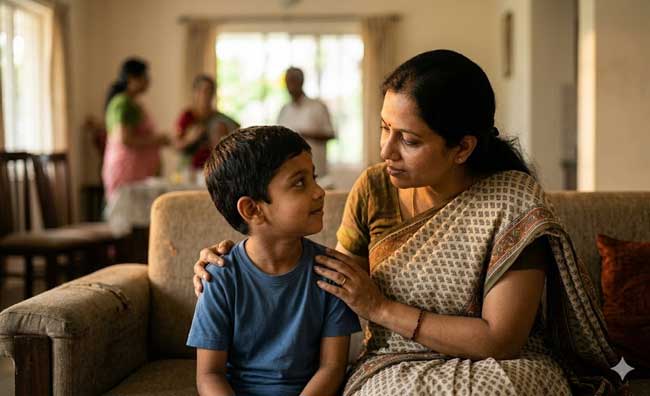
A child’s personality is shaped not only by education and resources but, more importantly, by the emotional environment in which they grow. The words and behavior of parents, teachers, and elders become the first lessons of life. When a child is humiliated in front of others or spoken about negatively in public, it does not remain a momentary incident—it often becomes a lasting emotional memory.
Home and society are a child’s first classrooms. In these spaces, they learn how to see themselves and how to interact with the world. When a child is scolded, insulted, or mocked in front of guests, relatives, or strangers, it does more than correct a mistake. It quietly weakens their self-esteem and creates a sense of embarrassment that can stay for years.
Many people believe that public criticism will “teach a lesson” or “improve the child.” However, in reality, it often produces the opposite effect. Instead of learning, the child begins to fear mistakes. This fear can lead to hiding the truth, lying to avoid punishment, or withdrawing emotionally from parents and elders. Slowly, communication breaks down within relationships that are meant to be safe and supportive.


Comparison is another harmful habit. Saying things like “look at how well that child performs” may seem motivational, but it often creates feelings of inadequacy. Every child has a different pace of learning, different strengths, and unique abilities. Constant comparison does not inspire growth; instead, it damages confidence and creates silent pressure.
Public humiliation leaves deeper scars than private correction. When a child is corrected in front of others, especially in social gatherings, they may feel unsafe and disrespected in their own environment. Over time, this can make them hesitant to speak openly even within their own family.
On the other hand, when a child is guided calmly and corrected in private, the learning is more effective and lasting. Respectful communication helps the child understand that making mistakes is normal, but it does not reduce their worth as a person. This balance of discipline and dignity builds trust.
A child’s mind is extremely sensitive. Words spoken during childhood often stay for a lifetime, shaping self-image and emotional strength. This is why parents and elders carry a great responsibility—to choose their words carefully and to guide with patience rather than humiliation.
True discipline does not come from fear or shame; it comes from understanding and respect. When children grow in an environment where they feel valued and heard, they naturally learn to respect others as well.
Therefore, it is important to remember that the goal is to guide children, not break them; to correct them, not humiliate them. A respectful childhood builds a confident, responsible, and emotionally strong future.