
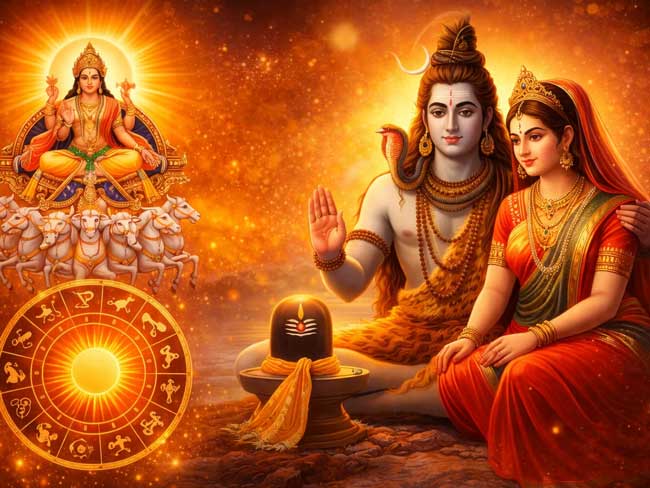
 One of the most beautiful aspects of the Sanatan tradition is that there is no month in the Hindu calendar without a sacred observance, fast, or festival. This continuous flow of devotion and spiritual reflection forms the very soul of Hindu culture. Among these sacred observances, Pradosh Vrat holds a special place as a day dedicated to the worship of Lord Shiva.
Pradosh Vrat is observed twice every month—on the Trayodashi (thirteenth lunar day) of both the Krishna Paksha and Shukla Paksha. The word “Pradosh” refers to the sacred twilight period, the divine junction between day and night. This time is considered especially auspicious for offering prayers to Lord Shiva. It is believed that when this fast is observed with proper rituals and sincere devotion, Lord Shiva showers abundant blessings upon His devotees.
The final Pradosh Vrat of the month of Phalguna is being observed today, Sunday, 1 March. Since it falls on a Sunday, it is known as Ravi Pradosh Vrat. According to tradition, the name of Pradosh Vrat changes based on the day of the week on which it falls. When observed on a Sunday, it carries an added spiritual association with Surya Dev (the Sun God), enhancing its divine significance.


Date and Auspicious Timing
The Trayodashi Tithi began on 28 February at 8:43 PM and will continue until 9:11 PM on 1 March. Based on the prevailing tithi at sunrise, the Pradosh Vrat is being observed today.
The most auspicious time for evening worship is between 6:21 PM and 7:08 PM. Performing Shiva-Parvati worship during this sacred twilight period is considered highly beneficial.
Importance of Sun Worship on Ravi Pradosh
Sunday is dedicated to Surya Dev. Therefore, on Ravi Pradosh, along with worshipping Lord Shiva, offering Arghya (water oblation) to the Sun God is considered highly auspicious. Offering water to the rising sun in the morning—preferably with red flowers or rice grains—symbolizes gratitude and invokes vitality, confidence, and clarity.
According to traditional beliefs, this practice helps remove obstacles in career and business and opens new avenues of growth and success.
Significance of Reciting Parvati Chalisa
Pradosh Vrat is not limited to the worship of Lord Shiva alone. Devotion to Goddess Parvati on this day completes the spiritual observance. Especially for those facing delays in marriage or disturbances in married life, reciting the Parvati Chalisa with faith is considered spiritually powerful.
Goddess Parvati symbolizes devotion, strength, grace, and marital harmony. Her blessings are believed to bring balance, peace, and sweetness into relationships. Worshipping both Shiva and Shakti together represents the harmony of consciousness and energy, leading to stability and spiritual elevation in life.
Brief Ritual Procedure
Devotees begin the day with a purifying bath and take a vow of fasting. Throughout the day, one should maintain discipline and a sattvic (pure) mindset. In the evening, after bathing again and wearing clean clothes, devotees perform Abhishekam of the Shivling with water, milk, and sacred offerings. Bilva leaves, flowers, and sacred items are offered while chanting “Om Namah Shivaya.” The recitation of Shiva stotras or Parvati Chalisa is recommended, followed by Aarti and distribution of prasad.
Spiritual Reflection
The final Ravi Pradosh of Phalguna is not merely a date on the calendar; it is an opportunity for inner reflection and surrender. As twilight descends and the world quiets, the devotee turns inward, offering thoughts and prayers at the feet of Lord Shiva.
Shiva signifies auspiciousness and transformation, while Parvati represents divine strength and compassion. When these energies align within one’s life, obstacles gradually dissolve, and clarity replaces confusion.
May this sacred observance bring spiritual growth, harmony, and divine grace to all who observe it with faith and devotion.