
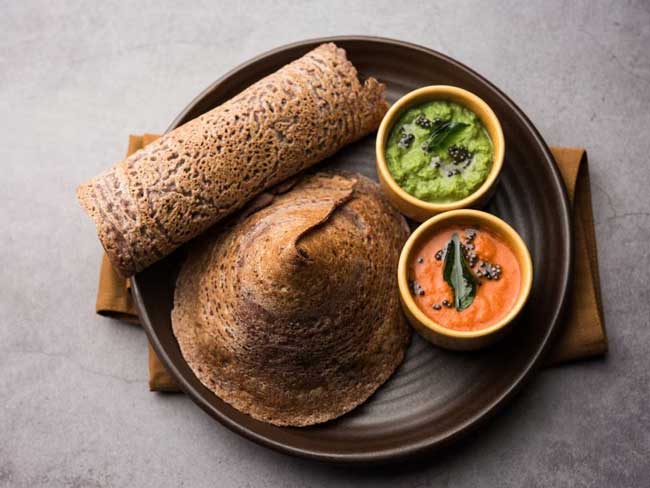
Ragi, also known as finger millet, is celebrated in Indian cuisine for its exceptional nutritional benefits. Rich in calcium, fiber, and protein, ragi supports heart health, strengthens bones, and helps regulate blood sugar levels. Including ragi in daily meals is a simple yet highly beneficial choice for overall well-being.
Ragi Dosa – A Healthy Twist to a Classic Favorite
Dosa is one of the most popular breakfast dishes in India. Making dosa with ragi not only enhances its flavor but also significantly boosts its nutritional value. With a lightly crispy exterior and soft interior, ragi dosa is suitable for people of all ages and is an excellent alternative to the traditional rice dosa.


Ingredients:
- Ragi flour – 1 cup
- Rice flour – ½ cup
- Urad dal (split black gram) – ¼ cup (soaked and ground)
- Salt – to taste
- Water – as required
- Oil – for cooking
Preparation Method:
- Soak rice and urad dal for 4–5 hours.
- Grind the soaked dal and rice into a smooth batter.
- Mix in the ragi flour and add water as needed to make a slightly thick, pourable batter.
- Add salt and let the batter ferment for 6–8 hours or overnight.
- Heat a non-stick pan or griddle and lightly grease it with oil. Pour a ladle of batter and spread it thinly.
- Cook on medium heat until crisp on both sides.
- Serve hot with coconut chutney or sambar.
Health Benefits:
Ragi dosa is low in calories and high in fiber, aiding digestion and promoting satiety. It helps in controlling blood sugar levels and is particularly beneficial for children and older adults for maintaining bone strength.
Ragi dosa is an ideal dish for modern lifestyles, offering a perfect balance of taste and nutrition. It can be enjoyed as a wholesome breakfast or a light dinner while staying true to the rich flavors of Indian cuisine.