
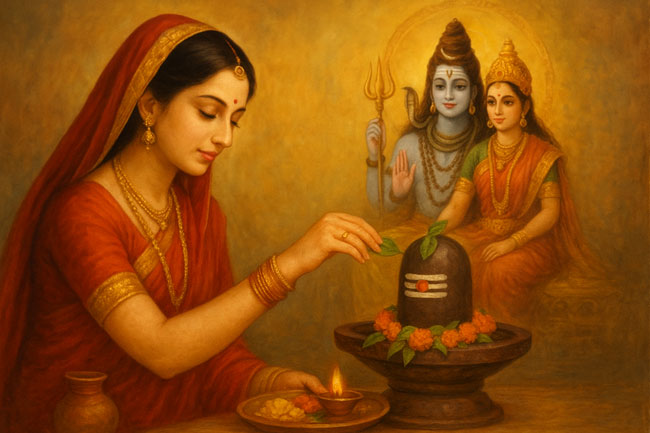
In the relentless rush of modern life, the human mind often becomes burdened by anxiety, uncertainty, and inner restlessness. At such moments, the timeless wisdom of Sanatan Dharma offers a path back to peace through devotion, self-discipline, and spiritual reflection. One such sacred observance is Pradosh Vrat, a revered fast dedicated to Lord Shiva.
In June 2026, devotees will observe Pradosh Vrat twice—on June 12 and June 27. According to Hindu tradition, the evening period of Trayodashi Tithi, known as Pradosh Kaal, is especially dear to Lord Shiva. Scriptures describe this sacred time as a moment when celestial beings gather to worship Mahadev and seek His blessings.
The Deeper Meaning of Pradosh
The word Pradosh signifies the removal of faults, impurities, and negativity. Therefore, Pradosh Vrat is much more than a ritual fast; it is a spiritual practice aimed at inner purification.


Human beings carry within themselves various limitations—anger, greed, attachment, pride, and ignorance. The observance of Pradosh encourages devotees to recognize these weaknesses and surrender them at the feet of Lord Shiva. In this sense, the vrat becomes a journey of self-transformation rather than merely a religious custom.
Why Is Pradosh Kaal Considered Sacred?
The twilight hour represents a transition between day and night, activity and stillness, the outer world and the inner self. Ancient sages regarded this period as highly conducive to meditation and spiritual practice.
According to Puranic traditions, Lord Shiva performs His cosmic dance during this sacred time, symbolizing the rhythm of creation, preservation, and transformation. Devotional activities performed during Pradosh Kaal—whether prayer, meditation, mantra chanting, or silent contemplation—are believed to yield profound spiritual benefits.
Beyond Fasting: A Time for Self-Reflection
In contemporary society, fasting is often reduced to abstaining from food. Yet the true essence of a vrat lies in discipline, mindfulness, and self-control.
Pradosh Vrat invites devotees to pause and ask themselves important questions:
- Are my thoughts pure and compassionate?
- Do my actions reflect kindness and integrity?
- Am I allowing ego and attachment to govern my life?
Seeking answers to these questions is itself a form of worship, for spiritual growth begins with honest self-examination.
Lord Shiva: The Easily Pleased Divine
Lord Shiva is lovingly known as Ashutosh—the One who is easily pleased. Unlike worldly rulers, He does not demand grandeur or wealth. A sincere prayer, a few sacred Bilva leaves, a pot of water offered with devotion, and a pure heart are considered sufficient to invoke His grace.
The Pradosh Vrats of June offer an opportunity to reconnect with these timeless truths. They remind us that true strength does not arise from material possessions but from inner peace, humility, and faith.
As devotees gather in prayer during these sacred evenings, they participate in a tradition that has inspired spiritual seekers for centuries. Whether one observes the fast formally or simply spends a few moments in meditation and remembrance of Lord Shiva, Pradosh serves as a gentle invitation to move from restlessness to serenity, from darkness to light, and from the noise of the world to the silence of the soul.
Har Har Mahadev.