
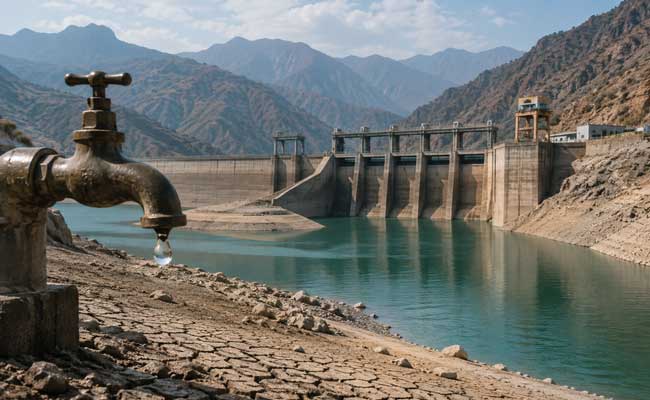
Pakistan’s water resources sector is expected to face significant delays in the upcoming fiscal year after the government proposed allocations far below the estimated funding requirements for ongoing and planned development projects, according to a report by The Express Tribune.
The Ministry of Water Resources had assessed that nearly PKR 969 billion would be required to finance various development schemes across the sector. However, the proposed budget allocation stands at only around PKR 179 billion, leaving a substantial funding gap that raises concerns over the continuity and pace of critical infrastructure work.
The development programme for the next fiscal year reportedly includes 41 ongoing projects, while only one new initiative has been introduced. The sole new project is linked to a hydropower generation facility associated with the Diamer-Bhasha Dam, for which a modest allocation of PKR 500 million has been proposed.

In addition, the budget earmarks PKR 25 billion for the construction of the Diamer-Bhasha Dam and PKR 7 billion for land acquisition related to the project. However, analysts note that these allocations remain limited compared to the overall financial requirements of such a large-scale infrastructure venture.
Experts caution that the sharp gap between required and allocated funds reflects the growing fiscal constraints facing Pakistan’s economy. With less than 20 percent of the estimated funding requirement being met, several key projects related to dams, irrigation systems, hydropower generation, and water management infrastructure may face delays or slower execution.
The shortfall is particularly concerning given the strategic importance of water infrastructure for Pakistan’s agriculture-dependent economy. Inadequate investment in water storage, irrigation networks, and energy-linked water projects could deepen existing resource challenges and limit long-term productivity growth.
Analysts further argue that underinvestment in critical water infrastructure may exacerbate water scarcity issues, increase vulnerability to climate variability, and place additional strain on food and energy security in the coming years.
The latest budget proposal highlights a widening gap between development ambitions and financial realities, underscoring the broader challenges Pakistan faces in sustaining large-scale infrastructure investment amid ongoing economic pressures.