
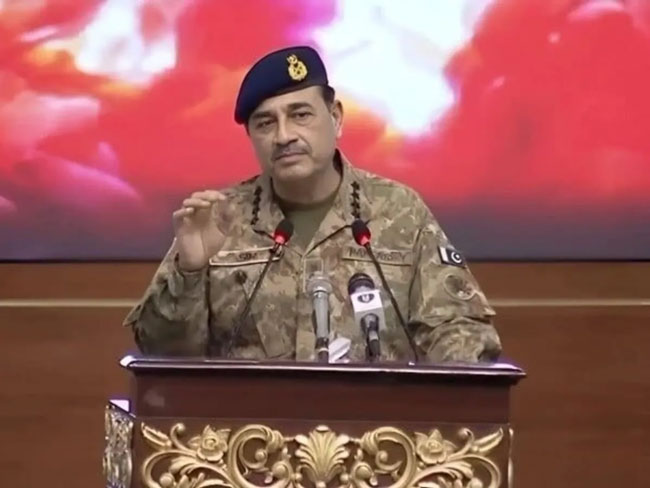
Desk : Reports and political allegations have surfaced claiming irregularities and alleged interference by the Pakistan Army in the upcoming Gilgit-Baltistan Assembly elections, scheduled for 2026. Opposition voices and local political actors have accused the establishment of influencing the electoral process, while also raising concerns over the alleged presence and protection of armed and extremist-linked groups in certain areas.
Gilgit-Baltistan, a strategically important and disputed region administered by Pakistan, is preparing for its assembly elections in which 24 general seats are up for contest. The elections are being closely watched due to the region’s sensitive geopolitical location and its proximity to the China–Pakistan Economic Corridor (CPEC) route.
According to the allegations highlighted in media reports, the Pakistan Army is accused of playing an active behind-the-scenes role in shaping the political environment ahead of the vote. Critics claim that administrative pressure, security arrangements, and influence over local institutions are being used to favor certain political outcomes.

Some reports further allege that in parts of the region, the electoral environment is being affected by the presence of armed groups, and that the security situation is being used as a justification for tighter military control. However, these claims remain politically charged and have not been independently verified by neutral international observers.
Local political leaders and civil society voices have demanded a transparent electoral process under the supervision of independent institutions, arguing that fair elections are essential for political stability in the region. They have also expressed concern that repeated political intervention could undermine public trust in the democratic process.
Gilgit-Baltistan has long been a region of political sensitivity, with questions over representation, governance structure, and constitutional status. Elections in the region are conducted under a separate governance order, and the federal government in Islamabad plays a significant role in administrative oversight.
As the election date approaches, political tensions are expected to rise, with competing parties preparing for a closely contested battle. Analysts believe that the outcome will not only shape local governance but could also have wider implications for regional stability and Pakistan’s internal political balance.