

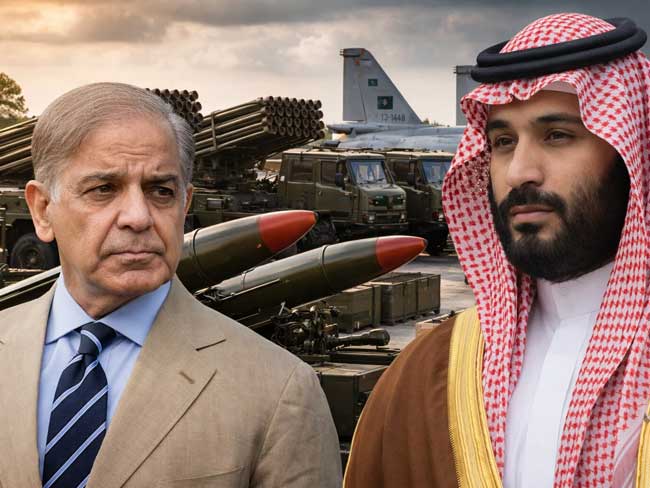
Desk : Pakistan has reportedly placed a major defence agreement with Sudan on hold following objections raised by Saudi Arabia. According to media reports, the deal, valued at over one billion dollars, was in its final stages and involved the supply of weapons, military systems and other defence equipment to the African nation.
Sources familiar with the matter said the agreement was expected to strengthen Pakistan’s defence export sector, which has been seeking new markets in recent years. However, the deal was paused after Saudi Arabia expressed concerns over the regional and political implications of supplying arms to Sudan at a time when the country remains engulfed in internal conflict.
Sudan has been witnessing a prolonged power struggle between its armed forces and the paramilitary Rapid Support Forces (RSF). The conflict has led to widespread destruction, displacement of civilians and a severe humanitarian crisis. International agencies have repeatedly warned about shortages of food, medicine and basic services in several parts of the country.

Analysts believe Saudi Arabia’s opposition reflects growing caution among Gulf nations regarding military involvement or indirect support in unstable regions. Riyadh has played a diplomatic role in Sudan-related peace efforts and is believed to prefer a negotiated political settlement rather than actions that could intensify the conflict.
For Pakistan, the suspension of the deal may come as a setback to its efforts to expand defence exports. Islamabad has been promoting its locally manufactured military hardware, aircraft systems and weapons in Asia, Africa and the Middle East as part of a broader economic strategy.
Experts also suggest that uncertainty surrounding this deal could impact other potential defence agreements Pakistan is exploring with countries in North Africa and the Middle East.
So far, neither the Pakistani government nor Saudi authorities have issued an official public statement on the reported suspension. However, the development is being closely watched as an indication of shifting geopolitical priorities in the region.