

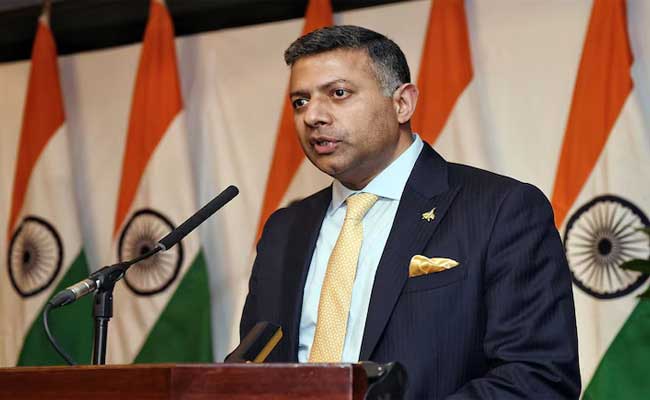
The Government of India has taken a significant diplomatic step by appointing senior envoy Vikram K. Doraiswami as the new Ambassador to China. The decision comes at a crucial juncture when relations between the two Asian giants remain delicate, underscoring the need for careful engagement, strategic balance, and sustained dialogue.
A Seasoned Diplomat with Global Experience
A 1992-batch officer of the Indian Foreign Service (IFS), Doraiswami brings with him over three decades of diplomatic experience. Known for his pragmatic approach and measured conduct, he has handled several key assignments that reflect both depth and diversity in international diplomacy.
Before this appointment, he served as India’s High Commissioner to the United Kingdom, where he played an instrumental role in strengthening bilateral relations, promoting trade and investment, and engaging actively with the Indian diaspora. Earlier, as High Commissioner to Bangladesh, he contributed to advancing cooperation in areas such as connectivity, regional security, and economic integration.


His diplomatic career has also included important postings across Asia and Europe, equipping him with a comprehensive understanding of geopolitical dynamics—an essential asset for managing ties with a complex and influential nation like China.
Strong Academic and Analytical Foundation
Doraiswami studied History at St. Stephen’s College, part of the University of Delhi. His academic background has provided him with a strong foundation in global history and international relations.
Notably, before entering the civil services, he worked as a journalist. This early professional experience sharpened his analytical skills and gave him the ability to assess international developments with clarity and perspective—qualities that have enriched his diplomatic engagements.
Deep Understanding of China
Widely regarded as a “China expert,” Doraiswami possesses proficiency in Mandarin, which enhances his ability to engage more effectively within China’s political and cultural framework. Early in his career, he was posted at the Indian Embassy in Beijing, where he gained valuable first-hand insight into the country’s governance and diplomatic functioning.
This familiarity with China’s internal systems and external posture is expected to prove particularly advantageous in navigating the complexities of bilateral relations.
Strategic Importance of the Appointment
Relations between India and China have faced persistent challenges in recent years, driven by border tensions—especially in the Ladakh region—alongside trade imbalances and broader geopolitical competition.
In this context, Doraiswami’s appointment is widely viewed as a carefully considered strategic move. His experience, combined with his understanding of China, is expected to help reinvigorate diplomatic channels, manage differences more effectively, and foster a more stable bilateral environment.
Conclusion :-The appointment of Vikram K. Doraiswami reflects India’s measured and forward-looking diplomatic strategy. It signals a commitment to maintaining open lines of communication while safeguarding national interests. With his extensive experience, linguistic capabilities, and prior exposure to China, Doraiswami is well-positioned to guide India-China relations toward greater stability, constructive dialogue, and pragmatic cooperation in the years ahead.