
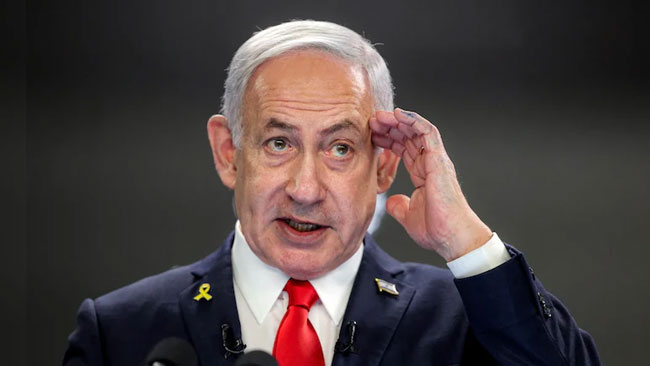
Tel Aviv: Israeli Prime Minister Benjamin Netanyahu has reiterated his government’s commitment to preventing Iran from acquiring nuclear weapons and maintaining military pressure on Hezbollah in southern Lebanon, despite growing regional tensions and ongoing diplomatic efforts between the United States and Iran.
Speaking at a memorial event marking the 50th anniversary of the death of his brother, Yoni Netanyahu, who was killed during the 1976 Entebbe rescue operation, Netanyahu said Israel would not compromise on its security interests.
“Whatever diplomatic developments may occur, I will not allow Iran to acquire nuclear weapons. As long as I am prime minister of Israel, that will not happen,” Netanyahu declared.


The Israeli leader linked his stance to what he described as a lifelong mission inspired by his brother’s sacrifice, stating that Israel remains steadfast in protecting its national security and strategic interests.
Defending Israel’s military actions over the past year, Netanyahu said the operations against Iran were launched to counter what he called an immediate threat posed by Tehran. He argued that without Israeli intervention, Iran could have already obtained nuclear weapons, posing a serious danger to the region.
Netanyahu also rejected calls for a rapid withdrawal of Israeli forces from southern Lebanon. He said Israel would continue to maintain a security presence in the area for as long as necessary to protect communities in northern Israel from potential Hezbollah attacks.
“We have achieved significant accomplishments and will not give them up. We will remain in the security zone in southern Lebanon for as long as necessary to safeguard the residents of the north and all Israeli citizens,” he said.
His remarks drew a sharp response from Hezbollah leader Naim Qassem, who insisted that Israel would not be allowed to maintain a military presence inside Lebanon. Qassem warned that Hezbollah was prepared to respond to any violations of the ceasefire agreement by Israeli forces.
The opposing positions underscore continuing tensions along the Israel-Lebanon border, despite a ceasefire agreement that recently came into effect. Israeli officials have indicated that their forces retain the ability to act against perceived threats across Lebanon, while Hezbollah has vowed to resist any prolonged Israeli presence on Lebanese territory.
The developments come amid heightened regional uncertainty as diplomatic efforts involving Iran and the United States continue, raising questions about the future security landscape in the Middle East.