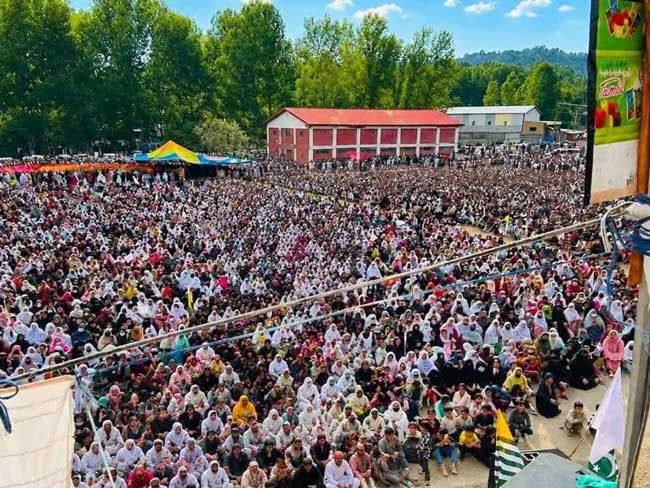
What is unfolding in Pakistan-occupied Kashmir (PoK) at present is not merely an administrative disturbance, but a visible eruption of long-simmering public anger. Thousands of people have taken to the streets, raising slogans and demanding the release of detained leaders, signaling that tensions in the region have reached a critical point.
The protests were triggered following a call by the Jammu Kashmir Joint Awami Action Committee (JAAC). Demonstrators allege that the arrests of their leaders and activists are not routine law-enforcement measures but an attempt to suppress democratic voices. On the streets, the protests have taken the form of collective outrage, reflecting both political frustration and social hardship.
Security forces have been deployed across several areas in an effort to maintain order. While the administration presents these measures as necessary for stability, the ground reality suggests that the unrest is not temporary. Instead, it appears to be rooted in deeper structural issues—rising inflation, unemployment, lack of adequate public services, and prolonged economic stress that has affected everyday life.
Amid the protests, a reported statement attributed to a JAAC leader, Sardar Aman Khan, has drawn significant attention. In it, he allegedly appealed to India and the people of Jammu and Kashmir for support, even referencing the possibility of crossing the Line of Control (LoC). Such remarks, regardless of their exact context, have added a new layer of political sensitivity to an already volatile situation and intensified regional debate.
However, beyond the political implications lies the more fundamental issue: the condition of ordinary people. For many residents, this unrest is not just about arrests or leadership disputes, but about long-standing grievances—limited opportunities, economic strain, and a perceived lack of representation. The protests reflect a deeper demand for dignity, rights, and meaningful participation in decision-making.
The Pakistani administration continues to monitor the situation closely, while protesters have vowed to sustain their agitation until their leaders are released and their demands addressed. At present, neither side appears willing to step back, leaving the situation tense and uncertain.
Ultimately, the developments in PoK highlight a broader and recurring question seen in many societies: how to balance governance, economic stability, and democratic expression in a way that does not allow public frustration to evolve into prolonged unrest.