
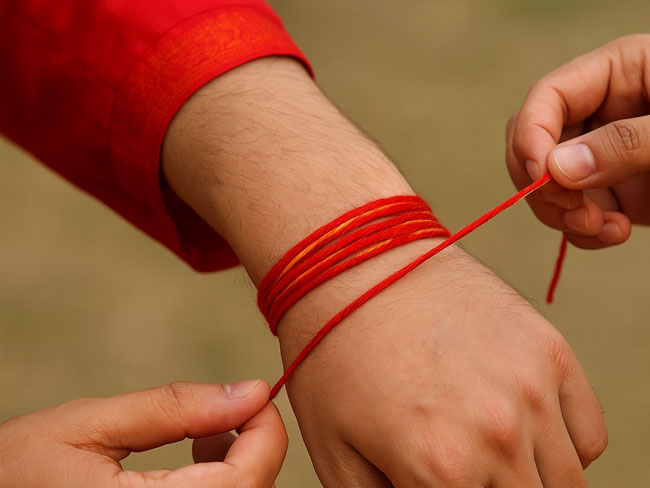
 In Indian culture, some symbols may appear simple in form, yet they carry deep layers of spiritual meaning and philosophical wisdom. Kalava, also known as mauli or raksha sutra, is one such sacred thread. It is not merely a colored string tied around the wrist, but a powerful symbol of faith, protection, and positive energy, deeply rooted in ancient religious traditions.
Spiritual Significance of Kalava
According to Hindu traditions, Kalava is tied during religious rituals, yajnas, and pujas after sacred chanting by priests. It is believed that once energized through मंत्र (mantras), the thread carries divine vibrations that create a protective aura around the individual.
This protective aura is not seen physically but is believed to safeguard a person from negativity, obstacles, and internal imbalance. Thus, Kalava represents both spiritual connection and inner strength.


Rituals and Rules of Wearing Kalava
The tradition of wearing Kalava follows certain symbolic rules that have been passed down through generations.
Men and unmarried women are traditionally advised to tie Kalava on the right wrist, while married women wear it on the left wrist. This distinction is symbolic, representing balance and spiritual alignment within different life stages.
The thread is usually tied in three, five, seven, or nine loops. These numbers hold spiritual significance in Indian traditions, symbolizing harmony, completeness, and auspicious energy.
While tying Kalava, sacred mantras are chanted, as sound vibrations are believed to activate the spiritual energy within the thread.
Duration and Spiritual Lifespan of Kalava
Kalava is not meant to be worn indefinitely. Traditionally, it is believed to remain spiritually active for a limited period, generally between seven to twenty-one days.
Over time, as the thread fades, loosens, or breaks, it is considered that its spiritual energy has been gradually discharged. At this stage, it is considered appropriate to replace it with a new one.
Some individuals continue wearing it until it naturally breaks, but classical tradition suggests periodic renewal to maintain continuous positive energy.
When Should Kalava Be Replaced
There are certain signs and occasions when Kalava should be changed:
When the thread becomes faded, worn out, or loose
After completion of a significant religious ritual or auspicious ceremony
Generally after a period of two to three weeks
Before beginning new spiritual or important life activities
Replacing Kalava is considered a way of renewing one’s spiritual connection and inviting fresh divine energy.
Respectful Disposal of Old Kalava
Since Kalava is associated with sacred energy, its disposal is also guided by respect and tradition. It is not considered appropriate to discard it casually.
Traditionally, old Kalava is placed under sacred trees like the Peepal tree, immersed in flowing water, or left in a temple. These practices symbolize the return of spiritual energy to nature and the divine source.
Precautions and Beliefs
Some traditional beliefs also suggest avoiding the removal of Kalava during inauspicious timings such as eclipses or new moon days. Tuesday and Saturday are often considered suitable days for changing it.
In special circumstances such as major life rituals, new beginnings, or ceremonial transitions, replacing Kalava is considered especially auspicious.
Kalava in Indian Spiritual Philosophy
Beyond rituals, Kalava reflects a deeper philosophy of Indian spirituality. It symbolizes the idea that human life is continuously connected with divine energy through faith and discipline.
This simple thread serves as a reminder that protection is not only physical but also energetic and spiritual. It connects individuals to tradition, culture, and inner awareness.
Conclusion
Kalava is more than a ritualistic thread; it is a subtle expression of faith, continuity, and spiritual discipline. It represents an unseen shield that nurtures confidence, positivity, and inner balance.
Its rules may appear simple, but they carry a profound message: life is sustained not only by material strength but also by spiritual awareness and devotion.