
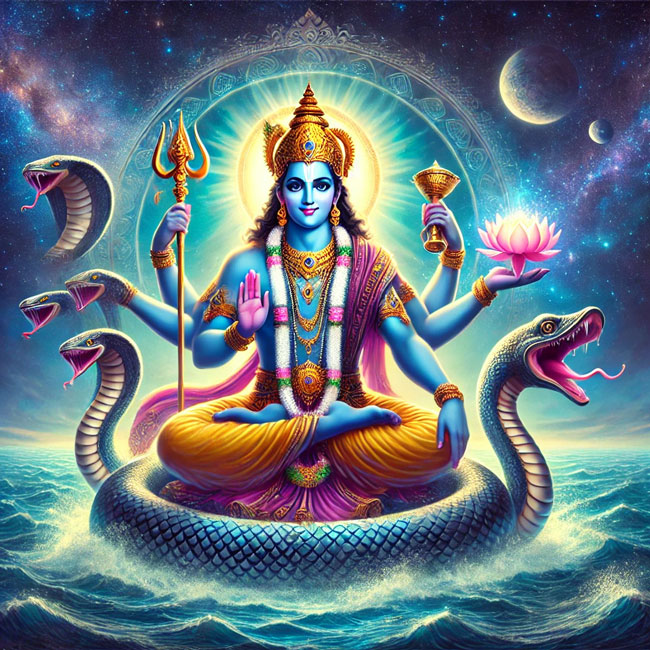
 In the Indian spiritual tradition, the idea of victory has never been limited to defeating external enemies. True victory is understood as an inner conquest—a continuous struggle within the human mind, where anger, ego, desire, and uncontrolled impulses repeatedly challenge our awareness. Jaya Ekadashi stands as a reminder of this deeper, more meaningful triumph.
The fast of Ekadashi is often viewed merely as abstinence from food, but its true purpose lies beyond the body. It is meant to discipline the mind. When we step away from physical consumption, we are invited to confront our inner cravings. The real question is not what we avoided eating, but whether we restrained our anger, softened our ego, and brought our desires under awareness.
The mythological narrative associated with Jaya Ekadashi speaks of a demon destroyed through devotion to Lord Vishnu. Symbolically, this demon represents the negative tendencies within us—born of ignorance, attachment, and lack of self-control. Devotion here signifies steady awareness; when consciousness is anchored in higher values, inner darkness begins to dissolve on its own.


In the modern world, where success is often measured only by outward achievement, Jaya Ekadashi urges us to pause and reflect. Have we ever achieved victory over our own restlessness? Does our fasting make us more patient, more compassionate, more humble? If not, the observance risks remaining a ritual without transformation.
Self-restraint, the essence of this Ekadashi, does not imply suppression. It is an act of understanding oneself. Why does anger arise? From what insecurity does ego emerge? What inner emptiness do desires attempt to fill? Engaging with these questions is the true spiritual practice this day invites.
Jaya Ekadashi also reminds us that devotion is not an escape from responsibility. True devotion purifies action and brings balance to life. When fasting is combined with introspection, it becomes a means of inner refinement rather than mere tradition.
Ultimately, the message of Jaya Ekadashi is clear: one who conquers the self needs no victory over others. This inner triumph alone is enduring, spiritual, and truly worthy of celebration.