
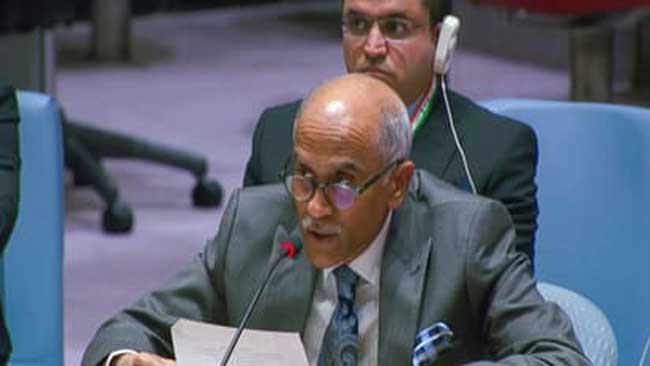
New York: India has renewed its push for comprehensive reforms of the United Nations Security Council (UNSC), calling for text-based negotiations and greater representation for developing nations, particularly African countries.
Speaking at a meeting of the Intergovernmental Negotiations (IGN) framework on Security Council reforms, India’s Permanent Representative to the United Nations, Parvathaneni Harish, stressed that the reform process should follow the same principles as other UN negotiations and be conducted on the basis of a written text.
“The IGN cannot be fundamentally different from other UN processes, wherein negotiations are held based on a text,” Harish said, underscoring India’s long-standing demand for a more structured and result-oriented reform process.

Harish also criticised the co-chairs’ Elements Paper, arguing that it does not accurately reflect the widespread support among member states for expanding the Security Council’s permanent membership. He objected to suggestions in the document that the concept of “permanency” requires further clarification, stating that the UN Charter already provides a clear distinction between permanent and non-permanent members.
“The UN Charter is very clear on this question and there is no room for ambiguity,” he said, referring to Article 23, which categorises Security Council members into permanent and non-permanent seats.
The Indian envoy noted that major negotiating groups, including the African Group, G4 and L69, recognise permanent membership in accordance with the provisions of the UN Charter and support expansion in that category.
Highlighting the issue of regional representation, Harish said the Elements Paper failed to adequately acknowledge the broad support for enhancing Africa’s presence in the Security Council. He pointed out that discussions on the African model had demonstrated strong backing from key stakeholders for increasing African representation.
Harish further argued that the document understates the level of international support for expanding the permanent category of membership. According to him, a majority of member states have expressed support for such reforms through national statements and group affiliations, including the L69, G4 and CARICOM.
India has consistently advocated for the expansion of both permanent and non-permanent categories of the Security Council, maintaining that the current structure no longer reflects contemporary global realities. New Delhi argues that meaningful reform is essential to make the Council more representative, inclusive and responsive to the aspirations of developing countries and the Global South.