

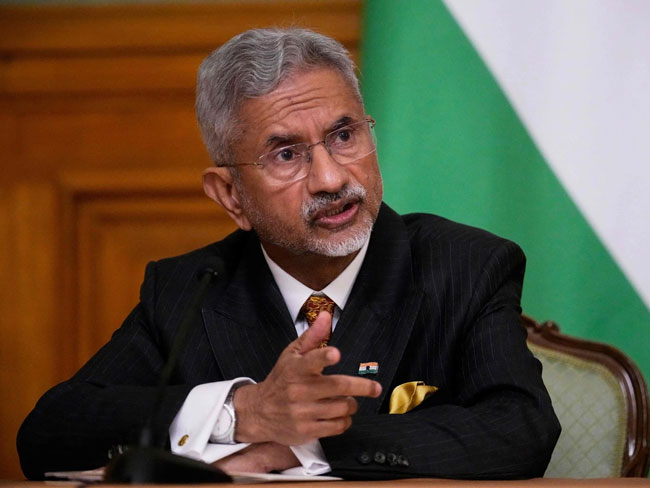
New Delhi: External Affairs Minister S. Jaishankar on Monday described the signing of the India–New Zealand Free Trade Agreement (FTA) as a “landmark” moment in bilateral relations, saying it will significantly strengthen economic cooperation between the two countries.
In a post on X, Jaishankar said the agreement would enhance investments, improve market access for Indian exporters, and deepen overall economic engagement. He added that the FTA would create new opportunities for innovators, entrepreneurs, farmers, MSMEs, women, and youth.
The agreement was formally signed at Bharat Mandapam in New Delhi by Union Commerce and Industry Minister Piyush Goyal and New Zealand Trade Minister Todd McClay, in the presence of senior officials, business leaders, and stakeholders from both countries.


According to officials, New Zealand has committed to investing around USD 20 billion in India over the next 15 years, reflecting strong long-term confidence in India’s growth potential.
The FTA process was formally launched on March 16, 2025, following talks between Prime Minister Narendra Modi and New Zealand Prime Minister Christopher Luxon. After five rounds of negotiations completed in just nine months, the agreement was finalised on December 22, 2025.
Under the agreement, New Zealand will eliminate tariffs on a wide range of Indian exports, including textiles, leather goods, carpets, ceramics, and auto components—products that currently face duties of around 10 percent. This is expected to significantly boost India’s export competitiveness. Agricultural exports such as tea, coffee, and spices will also benefit from improved access to the New Zealand market.
India, on its part, has offered market access on nearly 70 percent of tariff lines, while keeping about 30 percent excluded. Tariffs on roughly 30 percent of goods will be removed immediately, while others will see phased reductions.
Sensitive sectors such as dairy products (milk, cheese, butter, yoghurt), sugar, oils, gems and jewellery, and certain metals have been excluded from the agreement. However, products like apples, kiwifruit, and manuka honey will be allowed under tariff rate quotas, ensuring controlled imports.
In the services sector, New Zealand has opened over 100 sectors for Indian service providers, while India has extended similar access with certain limitations.
The agreement also facilitates mobility. Caps on Indian students have been removed, and extended post-study work opportunities have been introduced in STEM fields. Additionally, up to 5,000 visas will be available at any given time for skilled Indian professionals in sectors such as IT, healthcare, education, and construction.
Officials said the FTA is expected to boost trade, generate employment, and strengthen economic and strategic cooperation between the two democracies in the Indo-Pacific region.