
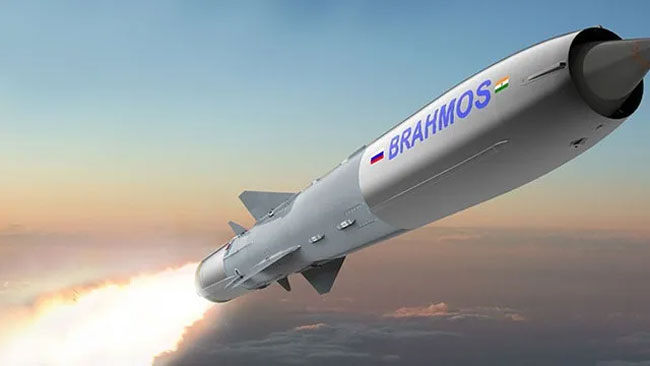
New Delhi: India has achieved a significant milestone in its defence export strategy as the deal for supplying the BrahMos supersonic cruise missile to Vietnam has been finalised, while negotiations with Indonesia are reportedly in their final stages. The development highlights India’s growing role as a global defence exporter and its expanding strategic influence in the Indo-Pacific region.
According to official sources and statements made during an international defence forum in Singapore, the agreement with Vietnam has already been signed, though it is yet to be formally announced in the public domain. The discussions with Indonesia are also progressing rapidly, with both sides close to reaching a final consensus.
Officials indicated that India is now actively pursuing a policy of sharing advanced defence technologies with trusted partner countries, marking a shift from being primarily an arms importer to becoming a credible defence supplier on the global stage.


The BrahMos missile, jointly developed by India and Russia, is widely regarded as one of the fastest supersonic cruise missiles in the world. Known for its high speed, precision strike capability, and versatility across land, sea, and air platforms, the missile has become a key symbol of India’s indigenous defence capability and technological advancement.
Vietnam and Indonesia, both strategically located in Southeast Asia, are increasingly focusing on strengthening their maritime security capabilities amid rising geopolitical tensions in the South China Sea region. The acquisition of BrahMos missiles is expected to significantly enhance their deterrence and defence preparedness.
For India, the deal represents not only a commercial success but also a major diplomatic achievement. It reinforces India’s position as a reliable defence partner and strengthens its strategic engagement with key countries in the Indo-Pacific region.
Defence experts believe that the export of advanced systems like BrahMos will further elevate India’s global standing, boost domestic defence manufacturing under the “Make in India” initiative, and deepen military cooperation with friendly nations.
Reports suggest that the overall value of the deal runs into thousands of crores of rupees, including missile systems, training, and logistical support. This is being seen as one of the most significant defence export agreements in India’s history.