
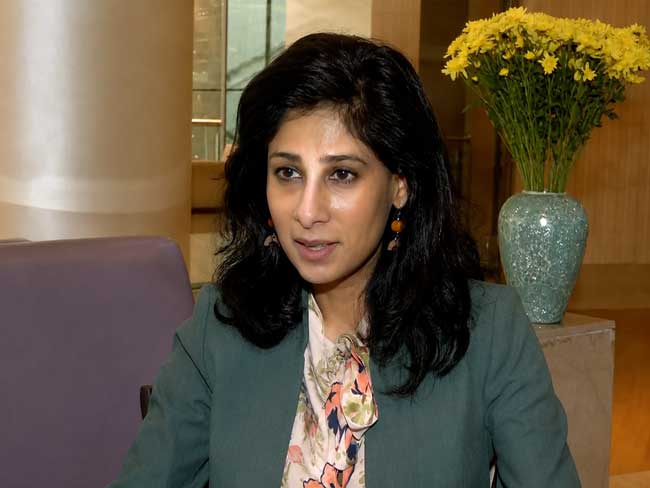
New Delhi: India’s economic growth could slow to around 6 per cent from the International Monetary Fund’s (IMF) projected 6.5 per cent as persistently high crude oil prices weigh on the economy, former IMF Deputy Managing Director and Chief Economist Gita Gopinath has said.
Speaking to ANI, Gopinath noted that oil prices are unlikely to decline significantly in the near term and may take until the middle of next year to return to the range of $70–75 per barrel. As a result, the impact of elevated energy costs is expected to continue into next year.
She said higher oil prices would affect both consumption and investment, potentially leading to slower economic growth than currently projected by the IMF.


Gopinath also warned that the outlook could deteriorate further if tensions in West Asia persist and disrupt global oil supplies. According to her, markets may be underestimating the risk of a prolonged conflict in the region.
She said that if the conflict continues for another month or longer, crude oil prices could rise to between $120 and $140 per barrel and remain elevated for an extended period. In such a scenario, global economic growth, currently projected at 3.1 per cent, could fall to around 2.5 per cent or even closer to 2 per cent, placing additional pressure on India’s growth prospects.
On policy measures, Gopinath emphasized the need for supply-side reforms to reduce India’s dependence on imported energy. She suggested increasing investments in renewable and nuclear energy while improving the ease of doing business to attract greater domestic and foreign investment.
She also highlighted the potential benefits of artificial intelligence (AI), stating that AI could be a net positive for India by enhancing its attractiveness as an investment destination and helping ease pressure on the rupee.
Gopinath further noted that shifting global trade patterns present significant opportunities for India. Expanding trade partnerships and signing new agreements, including with the European Union, could strengthen the country’s position in global supply chains and support long-term economic growth.