
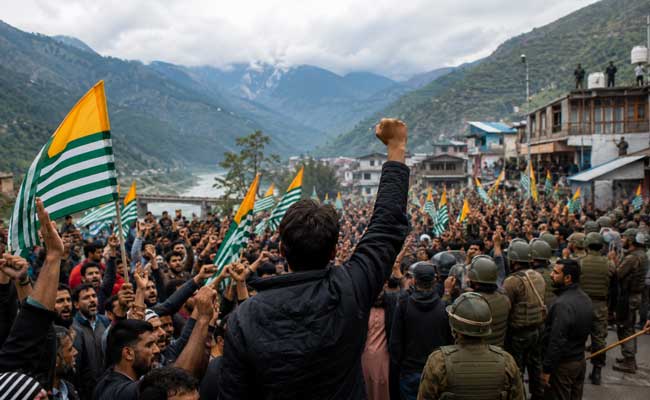
In Pakistan-administered Kashmir (commonly referred to as “Azad Jammu and Kashmir”) and Gilgit-Baltistan, sustained political and social unrest has been increasingly visible over the past few years. A series of mass protests and public mobilisations have drawn attention to long-standing grievances related to governance, economic hardship, and political representation.
Observers note that rising inflation, high electricity tariffs, and disputes over the distribution of hydropower benefits have been key drivers of public anger. Between 2023 and 2025, multiple large-scale demonstrations were reported, with residents demanding relief in utility bills, subsidies on essential goods such as flour, and fairer access to local resources.
In May 2024, protests centred around economic grievances and resource allocation gained significant momentum, reflecting deep dissatisfaction over living costs and the perceived inequitable sharing of benefits from regional hydroelectric projects. Earlier and later waves of protests similarly focused on basic civic and economic concerns, often escalating into tense confrontations with authorities.


Questions regarding the political structure of Pakistan-administered Kashmir have also remained central to the debate. Critics argue that the governance system in the region is heavily influenced by Islamabad, limiting genuine local autonomy. Controversy has also persisted over reserved legislative seats and the extent of external political control in local decision-making institutions.
Several political and civil society groups active in the region have positioned themselves as representatives of public rights, advocating for economic justice and greater political empowerment. At the same time, administrative authorities have frequently responded with strict measures aimed at maintaining public order, which in turn has further intensified tensions.
Analysts point out that similar patterns of dissent have also emerged in other parts of Pakistan, including Balochistan, Khyber Pakhtunkhwa, and Sindh, where issues such as resource control, governance, and political autonomy have repeatedly triggered public protests.
Human rights organisations and international observers have periodically raised concerns regarding civil liberties and freedom of expression in these regions. However, official positions have generally maintained that enforcement actions are necessary to ensure law and order and regional stability.
Overall, the continuing unrest in Pakistan-administered Kashmir and surrounding regions underscores persistent debates over governance, economic inequality, and political representation, reflecting deeper structural challenges within the region.