
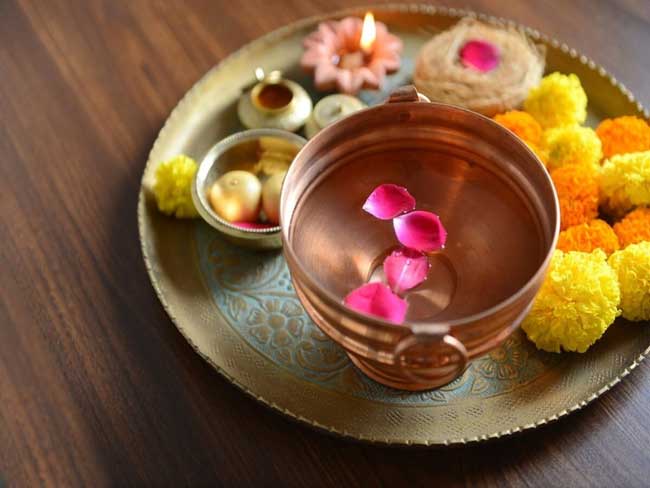
 In Hindu tradition, Ganga water is not considered ordinary water. It is revered as a sacred symbol of purity, divinity, and spiritual cleansing. From daily worship to important life rituals and final rites, Ganga water holds a central place. It is believed that wherever Ganga water is kept with reverence, negative energies cannot reside and the atmosphere remains pure. However, many people are unaware that scriptures also lay down specific rules regarding the vessel and place in which Ganga water should be stored at home.
The Most Auspicious Vessels for Storing Ganga Water
According to scriptures and long-standing traditions, Ganga water should ideally be kept in vessels made of copper, silver, or brass.
- Copper Vessel
Copper is regarded as a purifying metal. Ganga water stored in a copper vessel remains fresh for a long time and retains its natural cleansing properties. Spiritually, copper is believed to absorb and preserve positive energy. - Silver Vessel
If one has the means, keeping Ganga water in a silver vessel is considered highly auspicious. Silver is associated with calmness, purity, and sattvic qualities, making it ideal for worship. - Brass Vessel
Brass is also considered acceptable and sacred, especially when copper or silver is not available.
Vessels That Should Be Avoided
Scriptures advise against keeping Ganga water in certain materials:


- Plastic Containers
Plastic is considered impure for sacred purposes and is believed to weaken the spiritual energy of Ganga water. - Iron or Steel Vessels
Iron and steel are generally avoided in religious rituals, as they are not regarded as spiritually pure metals. - Broken or Rusted Containers
Storing sacred water in damaged or corroded vessels is considered inauspicious.
The Right Place to Keep Ganga Water at Home
Ganga water should always be placed in the home temple or prayer area. It should never be kept in the kitchen, bathroom, or directly on the floor. The vessel should rest on a clean cloth or platform, placed at an elevated and hygienic spot, and ideally covered with a lid to maintain purity.
Other Important Guidelines
- Hands and the vessel should be clean before taking out Ganga water.
- It should never be consumed directly by placing the mouth on the vessel.
- Although Ganga water does not spoil easily, it is considered respectful to replace it periodically.
- Any remaining Ganga water should be respectfully offered to plants, soil, or a sacred place.
Spiritual Significance
It is believed that Goddess Ganga resides in Ganga water. When it is kept at home according to scriptural guidelines, it helps maintain a sattvic environment, promotes inner peace, and protects the household from negative influences. Beyond faith, these practices also reflect a traditional understanding of cleanliness, respect, and mindful living.
Conclusion
The sanctity of Ganga water is preserved when it is stored with care, devotion, and in the right vessel. Keeping it in a copper or silver container in the prayer area helps sustain spiritual purity and positive energy within the home. This is not only a matter of religious belief, but also a reflection of India’s deep-rooted spiritual wisdom.