

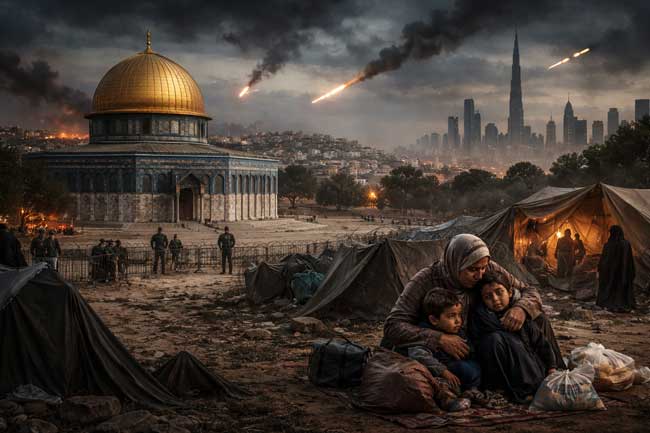
Muslims around the world observing Eid, but in many Arab countries, the festival was overshadowed by fear and tension. Traditional celebrations, which usually light up the streets of cities like Doha, Kuwait City, and Dubai, were muted this year. Citizens in several Gulf nations were barred from offering prayers in open spaces, as authorities feared potential missile attacks.
In one of Islam’s holiest sites, the Al-Aqsa Mosque in Jerusalem remained deserted. The Israeli administration had imposed restrictions on public gatherings, citing security concerns, following the outbreak of hostilities with Iran. The mosque, sealed off since the onset of the conflict, stood as a stark reminder of the heightened security environment.
Tensions Overshadow Ramadan and Eid Preparations
Countries including Saudi Arabia, Qatar, UAE, Iran, Pakistan, and Afghanistan could not witness the usual festive spirit. The holy month of Ramadan, which culminates in Eid, passed amid widespread unrest. Pakistan, during this period, attacked a hospital in Afghanistan, reportedly killing over 400 civilians. Across the region, Ramadan was marked less by spiritual reflection and more by bloodshed.

Iran’s Markets Remain Empty
In Iran, markets remained eerily quiet ahead of Eid. Following military strikes by Israel and the United States, authorities urged citizens to pray inside mosques or homes, strictly prohibiting open-air congregations. While some modest celebrations did take place, most businesses remained closed as people paid tribute to the war victims.
UAE Celebrations Lack Usual Glamor
Dubai, usually a hub of festive splendor during Eid, saw empty streets and quiet markets. The UAE had declared a four-day holiday for the festival, but public celebrations, fireworks, and large gatherings were canceled due to tight security measures.
Tributes and Restrictions in Iraq
Shia Muslims in Iraq offered tributes to Iran’s Supreme Leader, Ali Khamenei, who passed away recently. Even here, authorities discouraged large gatherings, with parents reluctant to bring children to public spaces.
Displaced Populations Celebrate in Shelters
In conflict-hit regions like Gaza and southern Lebanon, thousands celebrated Eid far from their homes, in temporary shelters. Markets remained largely closed, and the ongoing Israeli strikes in southern Lebanese cities have reportedly killed over 1,200 people. Fear dominated the atmosphere, and communities celebrated within the constraints of limited resources.
Temporary Ceasefires in Pakistan and Afghanistan
In Pakistan and Afghanistan, a temporary five-day ceasefire was announced during Eid, following mediation efforts by Turkey, Saudi Arabia, and Qatar. However, the fragile truce offered only limited relief as fear and uncertainty continued to overshadow the festival.
Across the Middle East and South Asia, Eid this year was not a time of joyous gatherings and vibrant celebrations, but a period marked by fear, remembrance, and cautious observance. The festival, traditionally a celebration of hope and unity, became a somber reminder of the ongoing conflicts and human suffering in the region.