
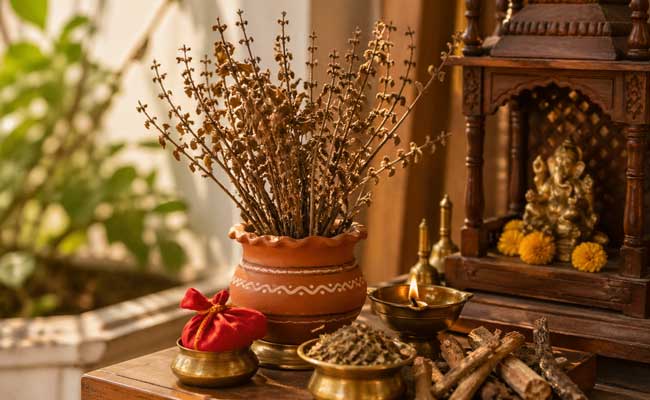
 In Indian culture, the Tulsi plant is regarded as far more than just greenery. It is considered a symbol of purity, devotion, and auspiciousness. Found in courtyards, balconies, and prayer spaces across countless homes, Tulsi holds a deeply respected place in daily life. It is widely believed that where Tulsi is present, positive energy also resides.
When a Tulsi plant dries up, many people simply discard it, assuming it has no further use. However, according to traditional beliefs and Vastu principles, even dry Tulsi remains valuable. Its dried leaves, stems, and wood are considered useful in several symbolic ways that are believed to invite peace, prosperity, and harmony into the household.
Keep Dry Tulsi in the Prayer Area
Clean and preserved dry Tulsi wood may be placed in the home temple or prayer space. It is believed to maintain the sanctity of the area and enhance positive vibrations.


Place Dried Leaves Near Valuables
Some traditions suggest wrapping dried Tulsi leaves or flowers in a red cloth and keeping them in a locker, cupboard, or place where money is stored. This is believed to symbolize financial stability and protection from unnecessary expenses.
Use in Evening Lamps
During evening prayers, a small piece of dry Tulsi wood may be added to an oil lamp. It is traditionally believed that this helps create a peaceful and purified atmosphere in the home.
Use in Sacred Rituals
Dry Tulsi wood is also used in havan and other religious ceremonies. Traditionally, it is associated with purification and spiritual positivity.
Keep Near the Main Entrance
Some households place small dry Tulsi twigs near the main entrance. This is believed to help ward off negativity and welcome auspicious energy into the house.
An Important Note
These remedies are based on faith, customs, and traditional beliefs. They should be viewed as cultural practices rather than scientific facts. If a Tulsi plant dries up, planting a fresh one and caring for it regularly is also considered highly auspicious.
Tulsi is not merely a plant; it is an enduring part of Indian spiritual heritage. Respecting and reusing even dry Tulsi reflects reverence for both tradition and nature.