

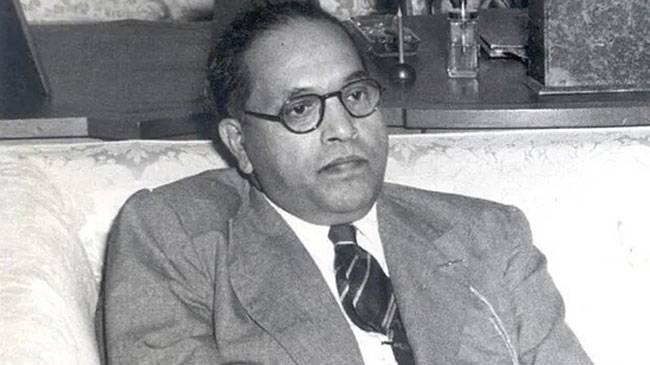
The history of India is marked by the rise and fall of several religious and philosophical traditions. Among them, the rise of Buddhism and its gradual disappearance from most parts of India remains one of the most significant historical questions. Dr. B. R. Ambedkar offered a detailed interpretation of this phenomenon, highlighting multiple social, political, and historical factors behind it.
Rise and Influence of Buddhism
Buddhism emerged in the 6th century BCE as a major reform movement in ancient India. It challenged ritualistic practices, the dominance of the caste system, and complex sacrificial traditions. Instead, it promoted values such as equality, compassion, and ethical living. For several centuries, Buddhism had a strong presence across large parts of the Indian subcontinent.
Ambedkar’s Perspective: Multi-Causal Decline
According to Dr. Ambedkar, the decline of Buddhism in India cannot be attributed to a single cause. Instead, it was the result of a combination of internal weaknesses and external historical developments.


He primarily emphasized two broad categories:
1. Internal Social and Institutional Factors
Ambedkar pointed out that Buddhist monastic institutions gradually lost discipline and weakened in organizational structure. Over time, their connection with the general population also declined, which reduced their social influence.
2. External Political and Invasion-related Factors
He also noted that during the medieval period, various foreign invasions and political upheavals caused significant damage to Buddhist monasteries and centers of learning. In many regions, these institutions were destroyed or lost their prominence, contributing to the decline of Buddhism.
Decline Across Other Asian Regions
Ambedkar also observed that Buddhism did not remain confined to India. It spread widely across Central Asia, Gandhara, and other regions. However, in many of these areas as well, its influence gradually diminished due to changing political and religious environments.
The Survival of Hindu Traditions
Ambedkar raised an important question: if Buddhism declined despite its early dominance, how did Hindu traditions manage to survive?
He suggested that factors such as stronger social organization, adaptability to local traditions, and political support played a key role in the continuity of Hinduism compared to Buddhism.
Scholarly Debate and Modern Interpretation
This topic remains widely debated among historians. Some scholars attribute the decline of Buddhism primarily to internal social and institutional decay, while others emphasize the role of external invasions and political disruptions. Modern interpretations often combine both perspectives to present a more balanced understanding.
Conclusion
Dr. Ambedkar’s analysis presents the decline of Buddhism as a complex historical process shaped by multiple factors. His interpretation highlights that the rise and fall of any civilization or religious tradition cannot be explained by a single cause, but must be understood through a combination of social, political, and historical dynamics.